Tuesday, 11/18/25
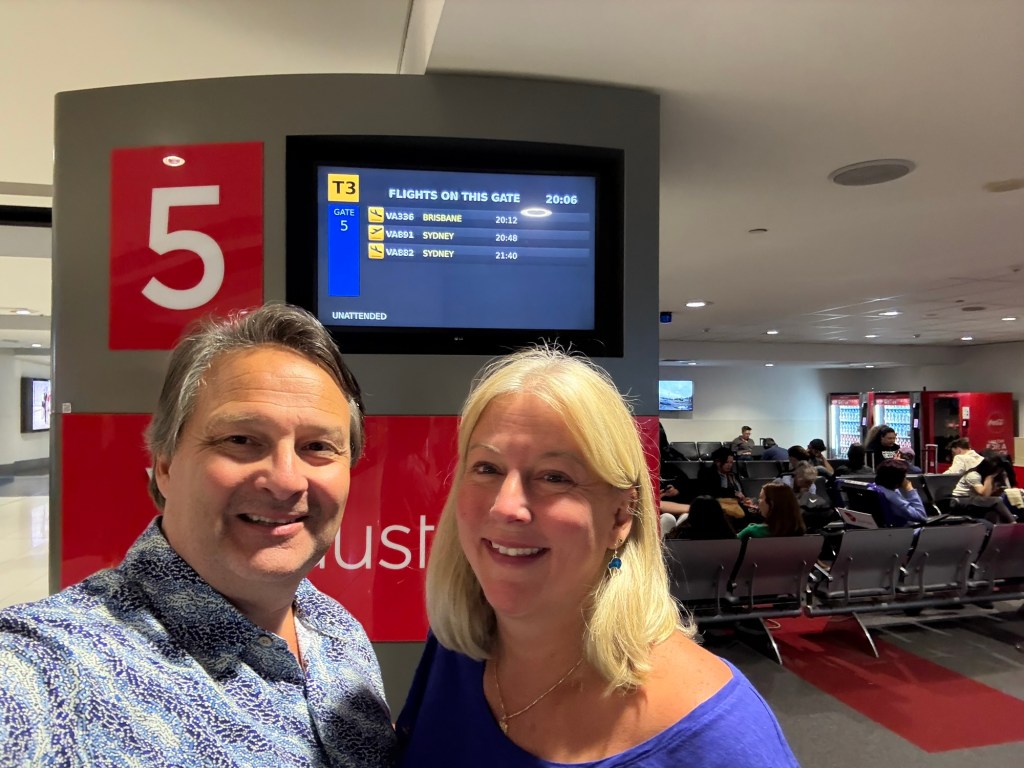
On Tuesday morning we officially began the second half of our four month, epic journey by leaving Sydney and heading to the Outback. While our flight time to Uluru/Ayers Rock was three hours and thirty five minutes, we landed only two hours after we left because of the strange (half hour interval!) time zone change here. Next time we are back in the US and make the mistake of complaining about time changes, I will try to remember: at least we don’t have half hour time zone changes!

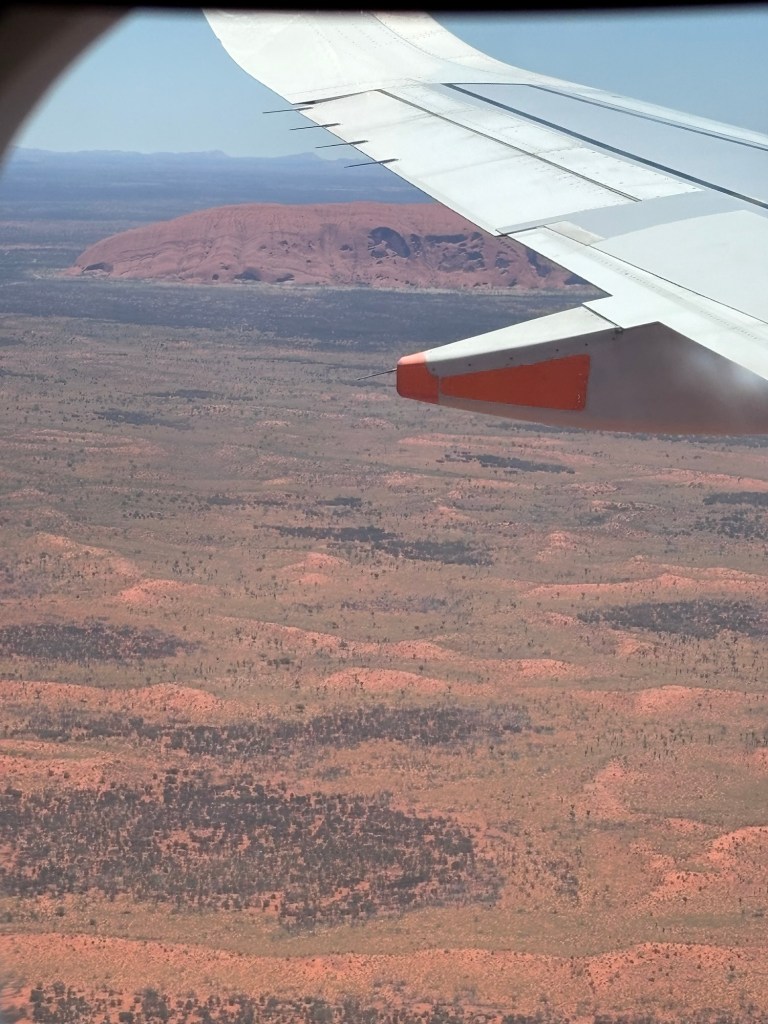
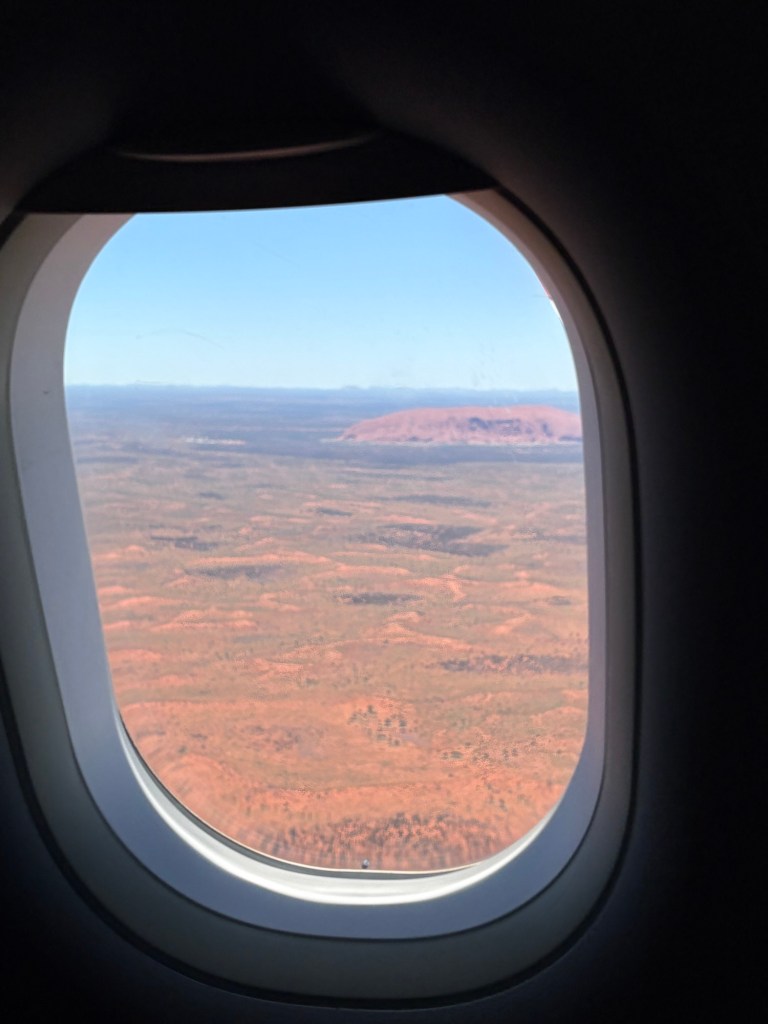
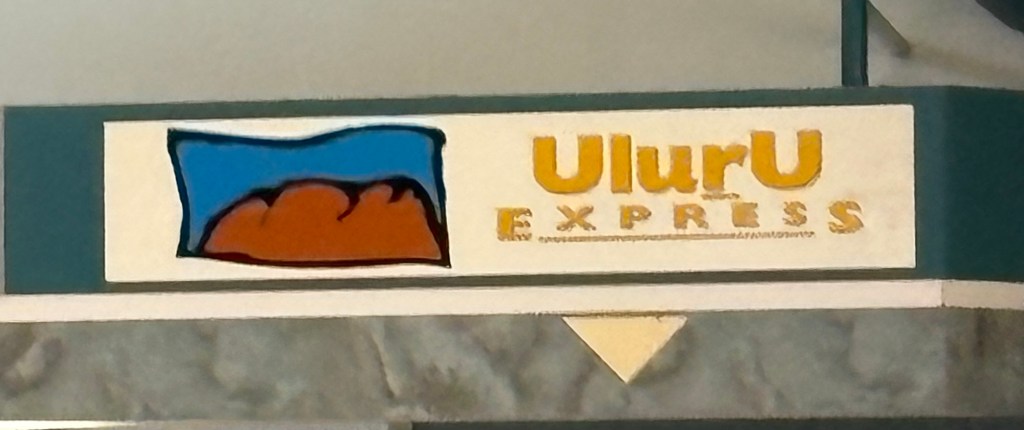

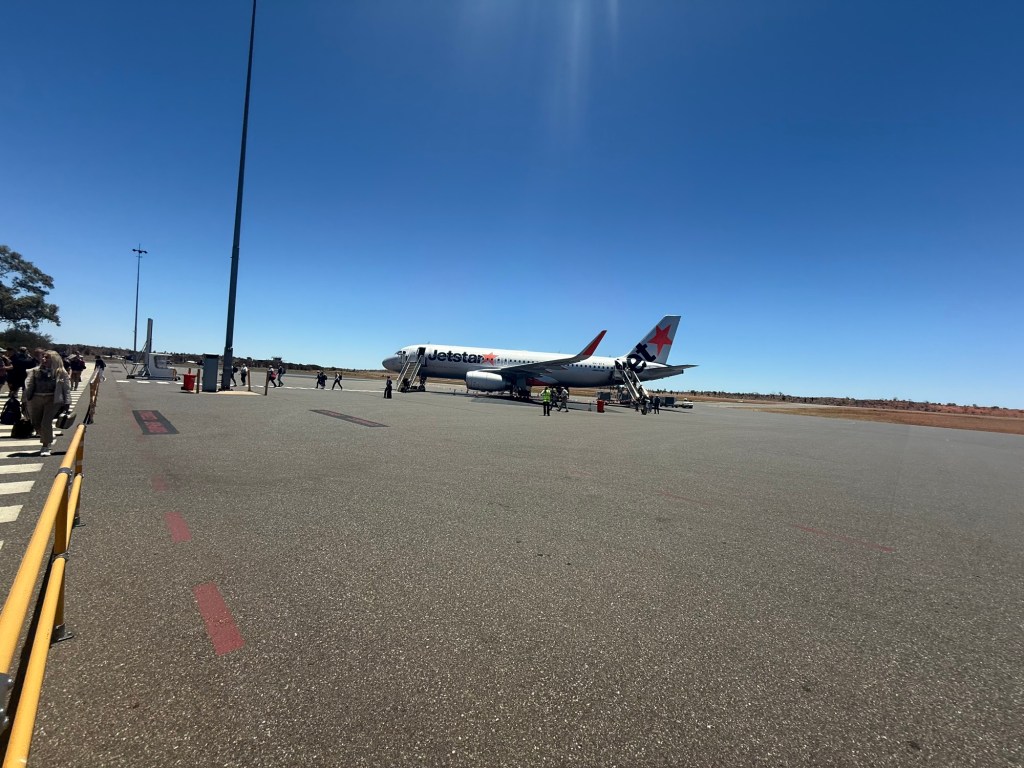
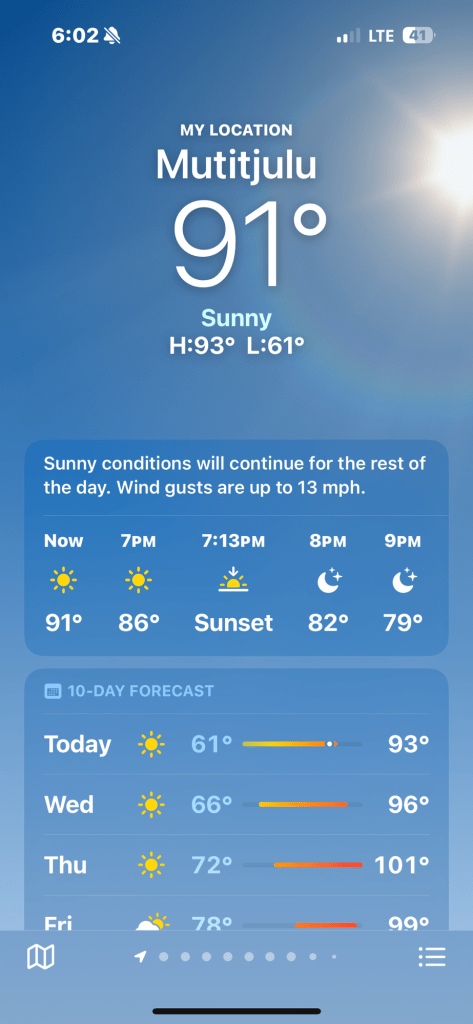
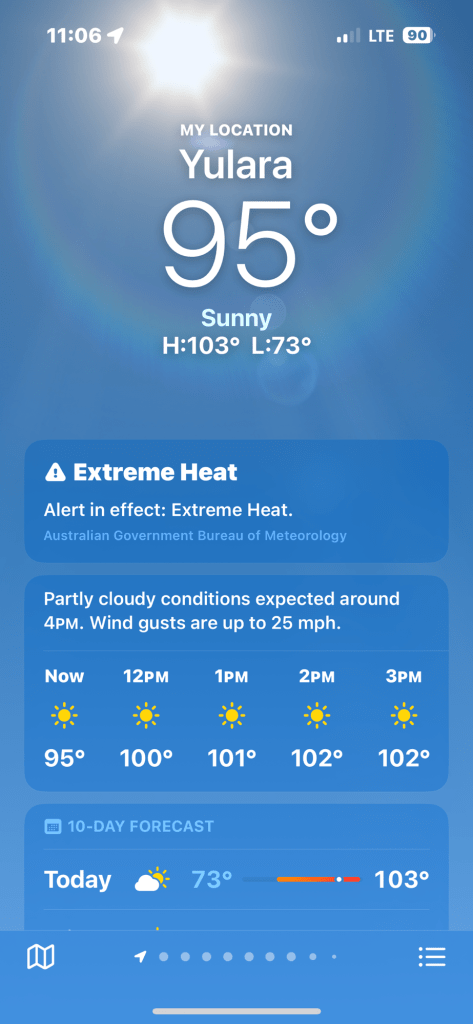
Flying in to the Outback was fascinating. It was entirely red dirt and scrubby, desert trees and bushes, giving it an otherworldly feel from the air. We could actually see Ayers Rock from the plane, which was a treat. They have a tiny airport, with no taxis or Uber- only rental cars and shuttles to the few hotels they have out here. It was in the mid 90s when we landed, so it felt extra weird to see everyone’s photos on social media from back home in hats and coats. 😫
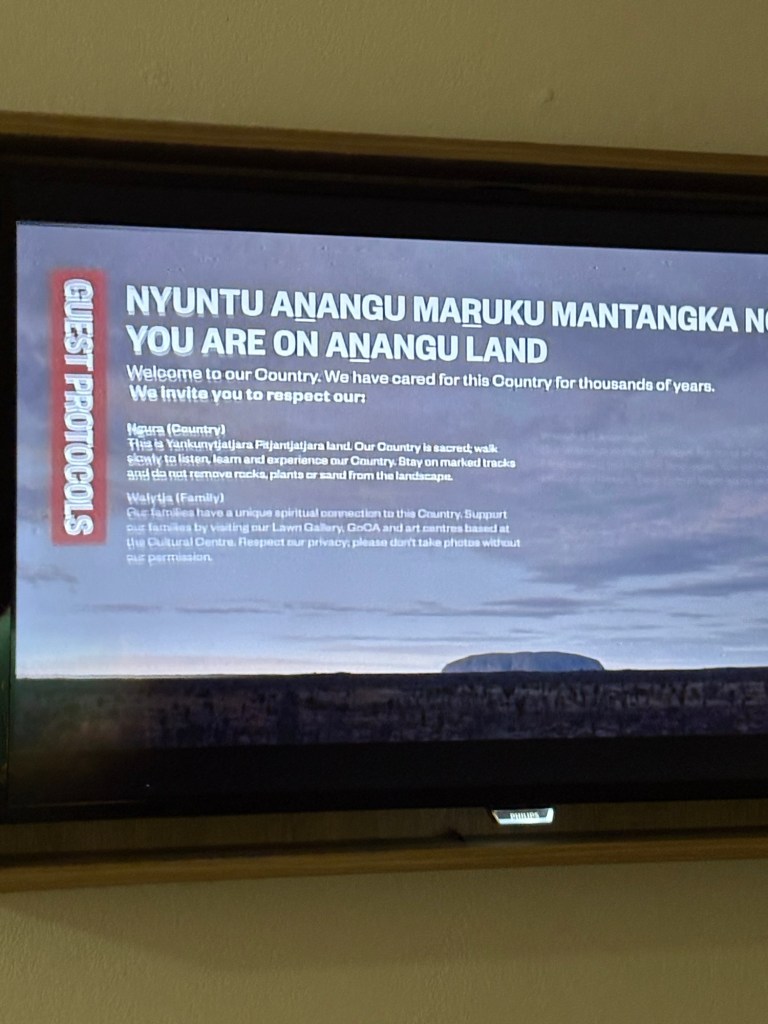
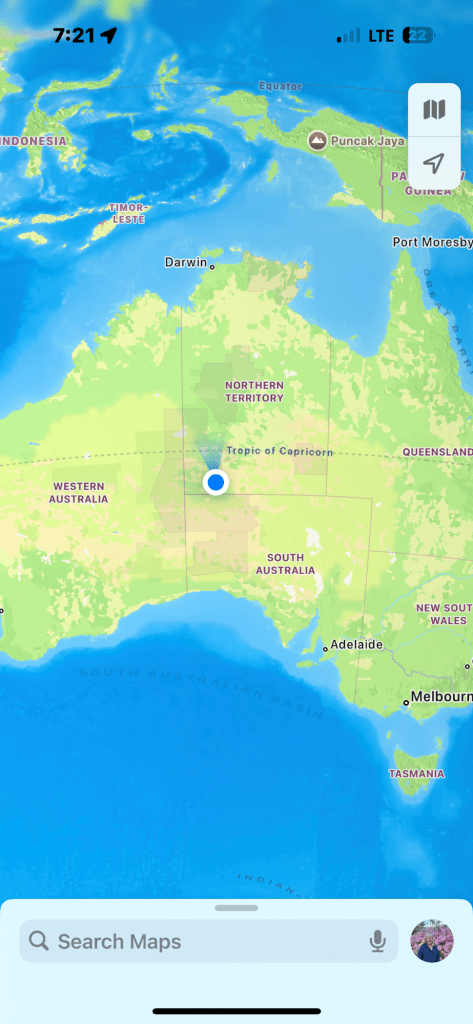
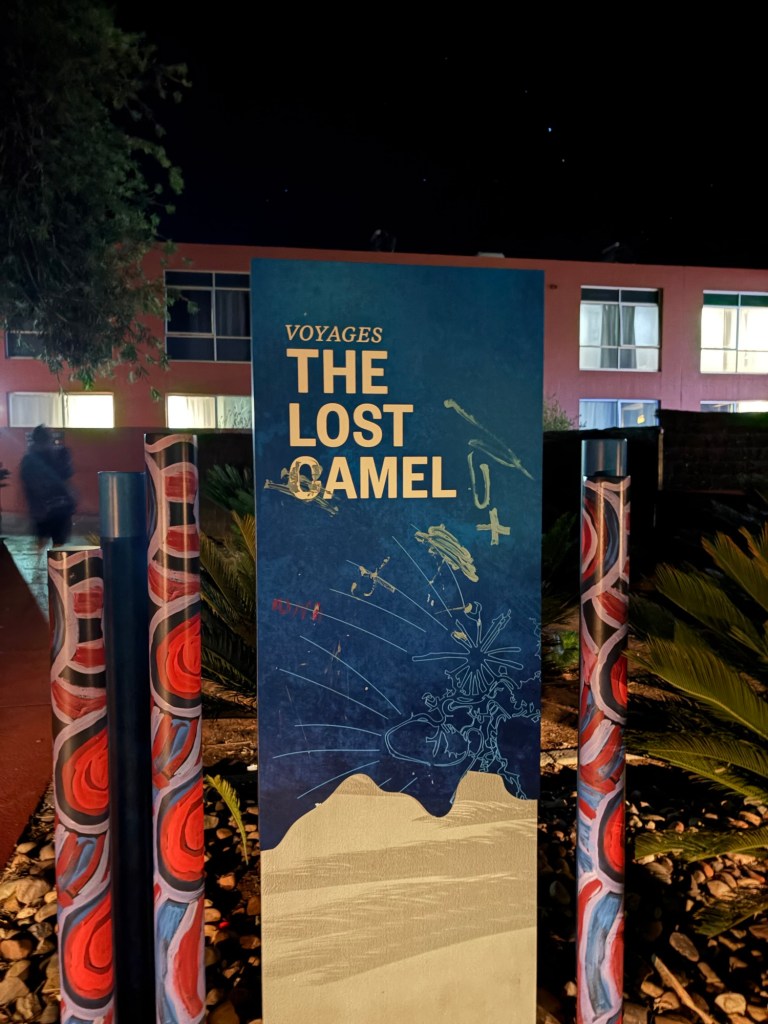
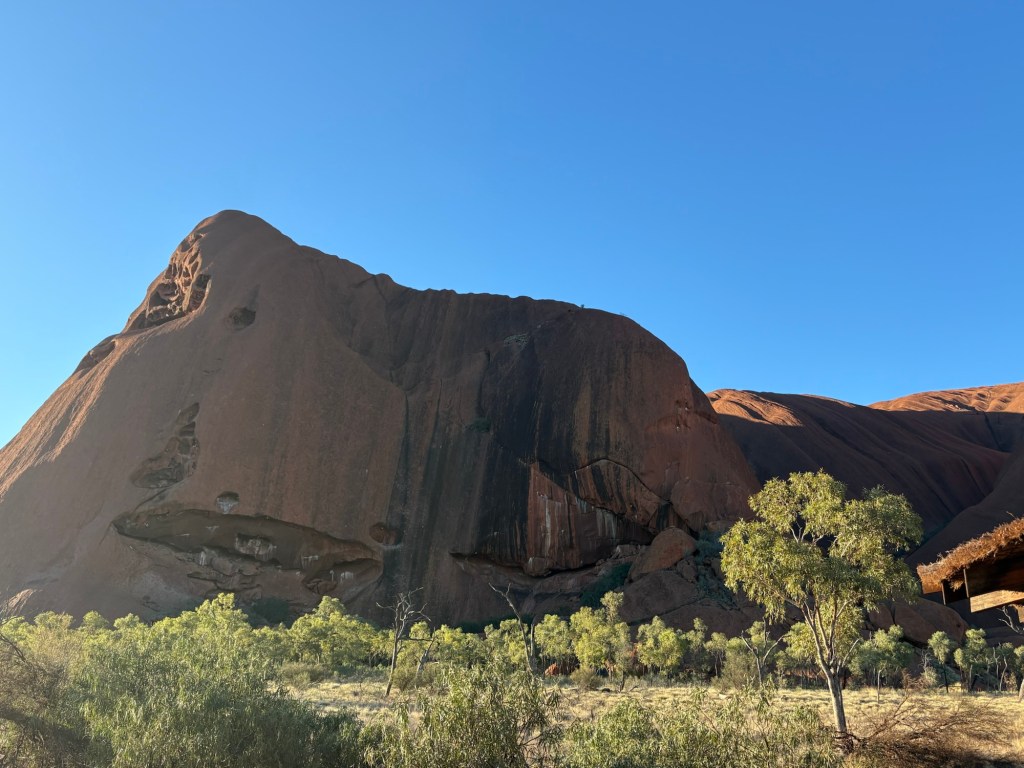
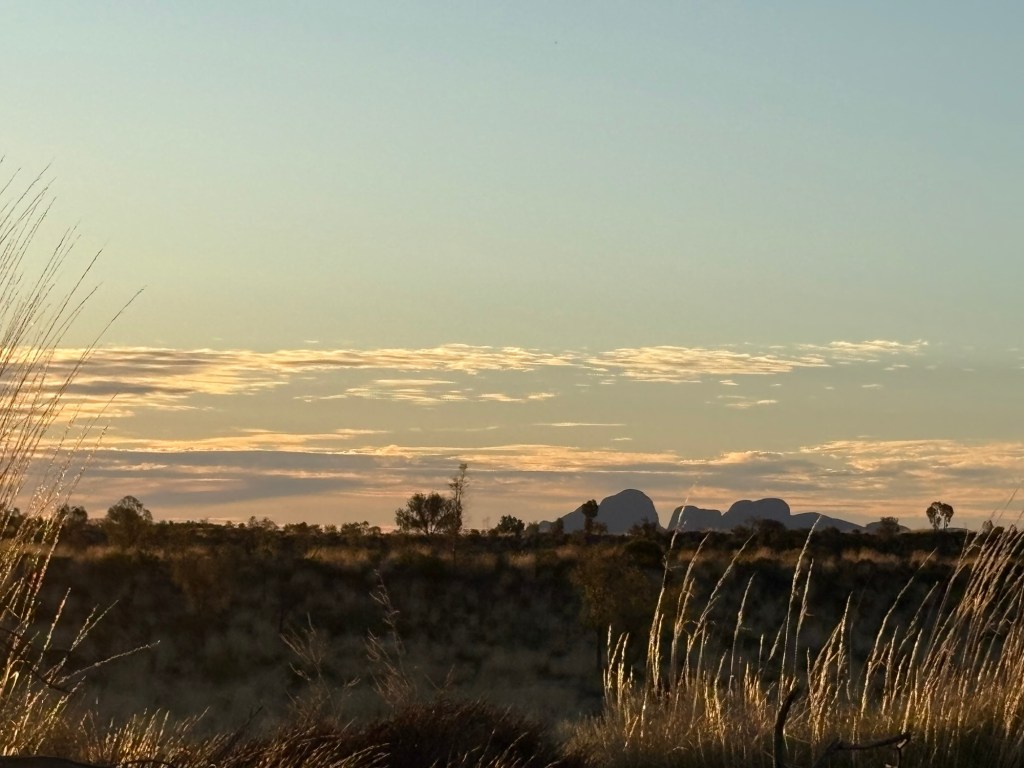
Ayers Rock Resort in Yulara is the name of the small village area here in the Outback that has several hotels, a small shopping area, and a post office. Our hotel, the Lost Camel, is part of the “resort,” which also hosts daily free activities to teach tourists about the indigenous Australians such as a class on bush tucker, bush yarns, a digeridoo workshop, and more. They also have experiences you can buy such as a nighttime light show in the desert, a high tea, etc. Right next to the village is the main reason people come all the way out here: the Uluru-Kata Tjuta National Park. The park houses the giant sandstone monolith (known as Uluru/Ayers Rock) that is sacred to the Aboriginal (Anangu) people, and 50 km away from the rock is Kata Tjuṯa (meaning “many heads”), a series of 36 steep domes. Both parts of the park have viewing points and walking paths.
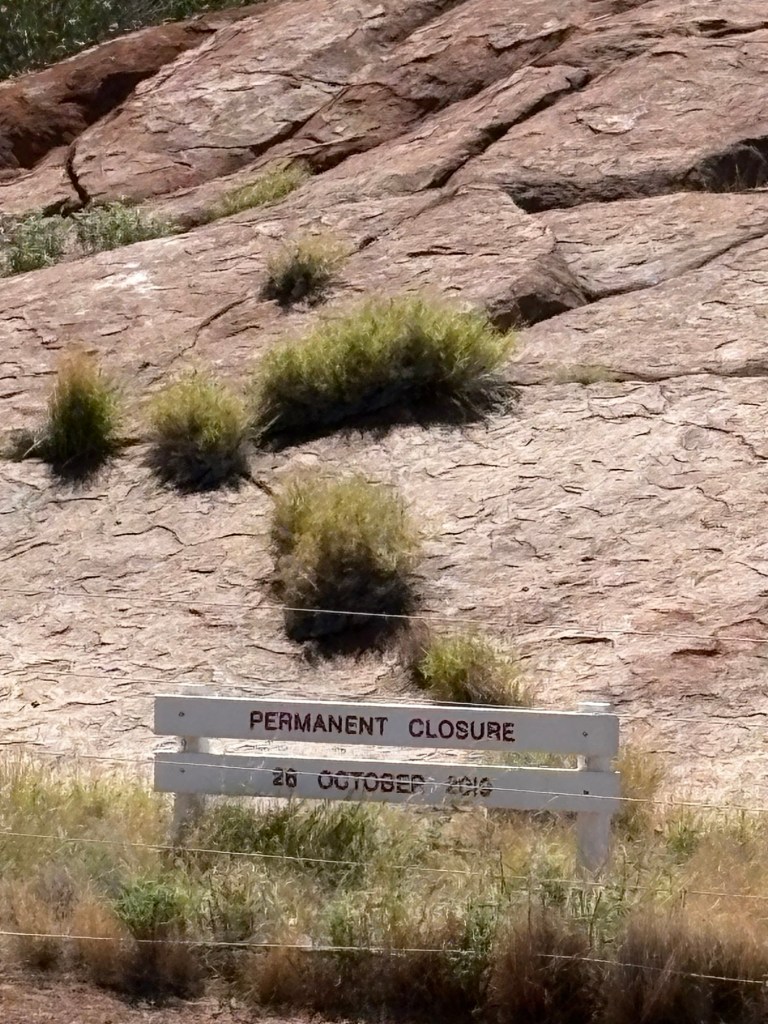
Luckily our hotel also has a nice, cold pool, so we took a swim. Rob wisely stayed at the pool while I decided to try to educate myself and go to the “Bush Yarns” class, where we were supposed to have an Anangu person tell us stories about life in the bush. I walked a half mile to the story site literally thru the desert, only to find this sign:

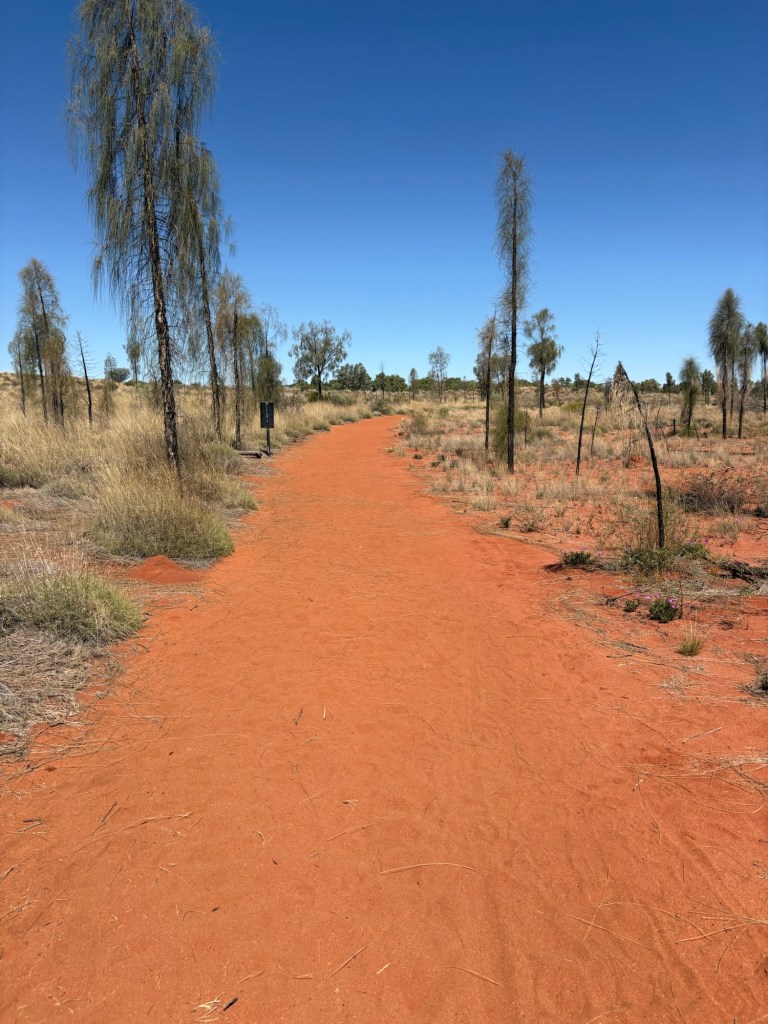
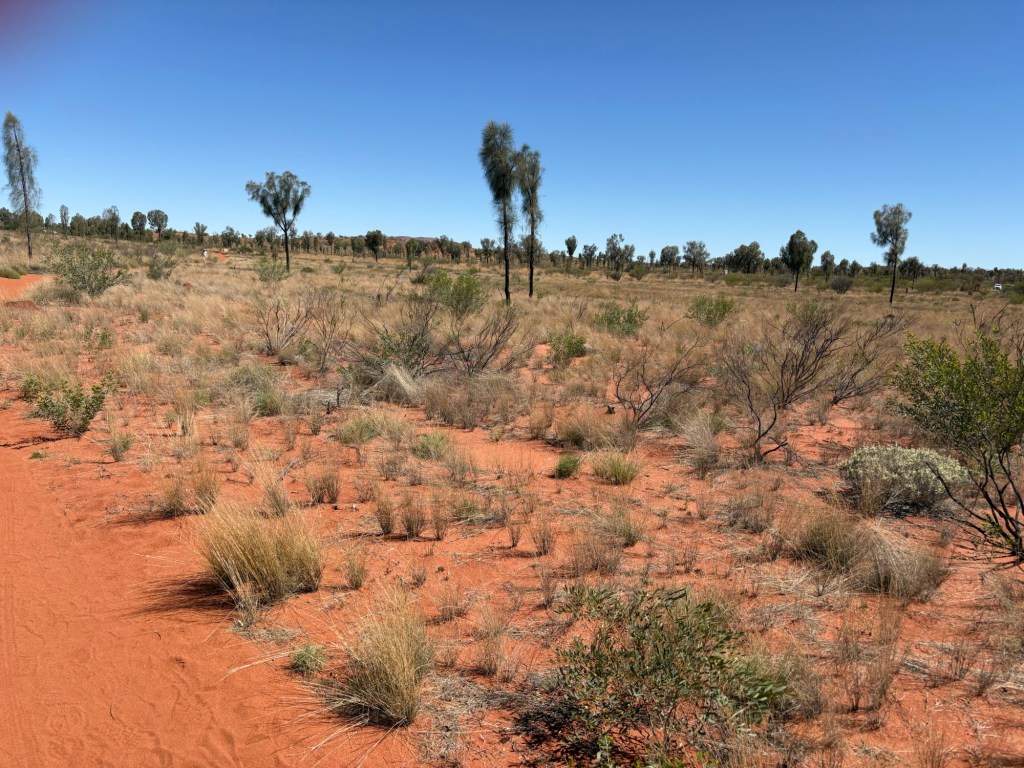
A few other people showed up, too, and when we all walked together to the closest hotel to ask about the class, we’d were told they sometimes cancel classes if it is “too hot”. I cried a little… okay, not really, but I was prettty dang miserable and kept thinking about Rob floating around back at the hotel pool. Moral of the story: stay ignorant, my friends. 😂
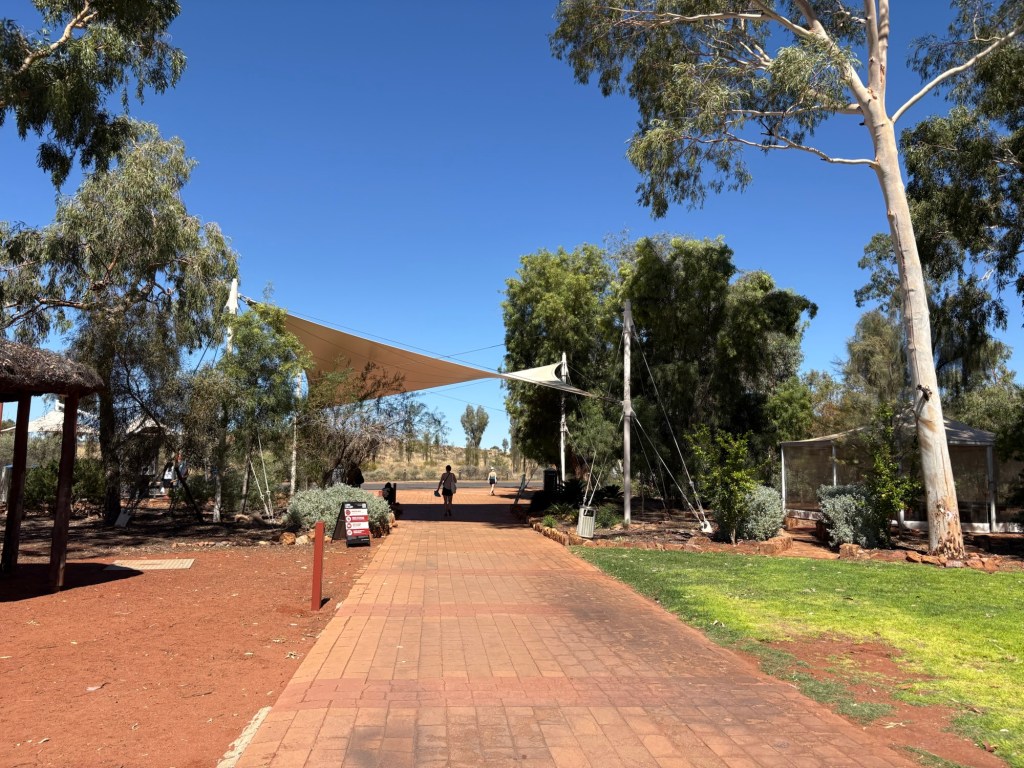
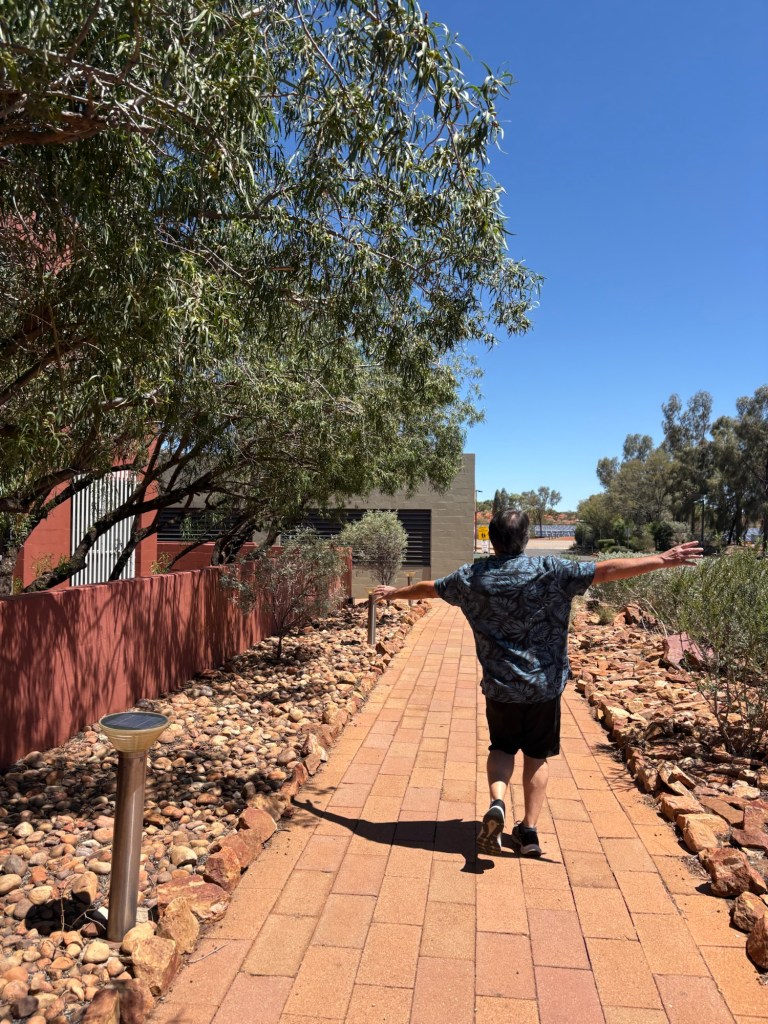
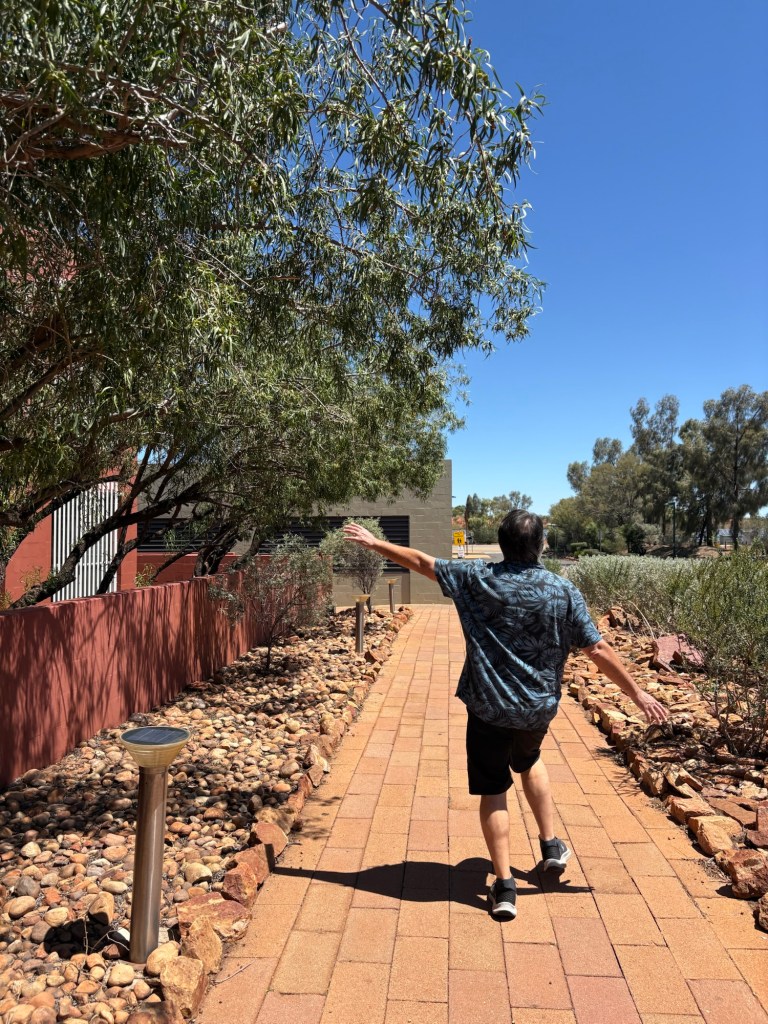
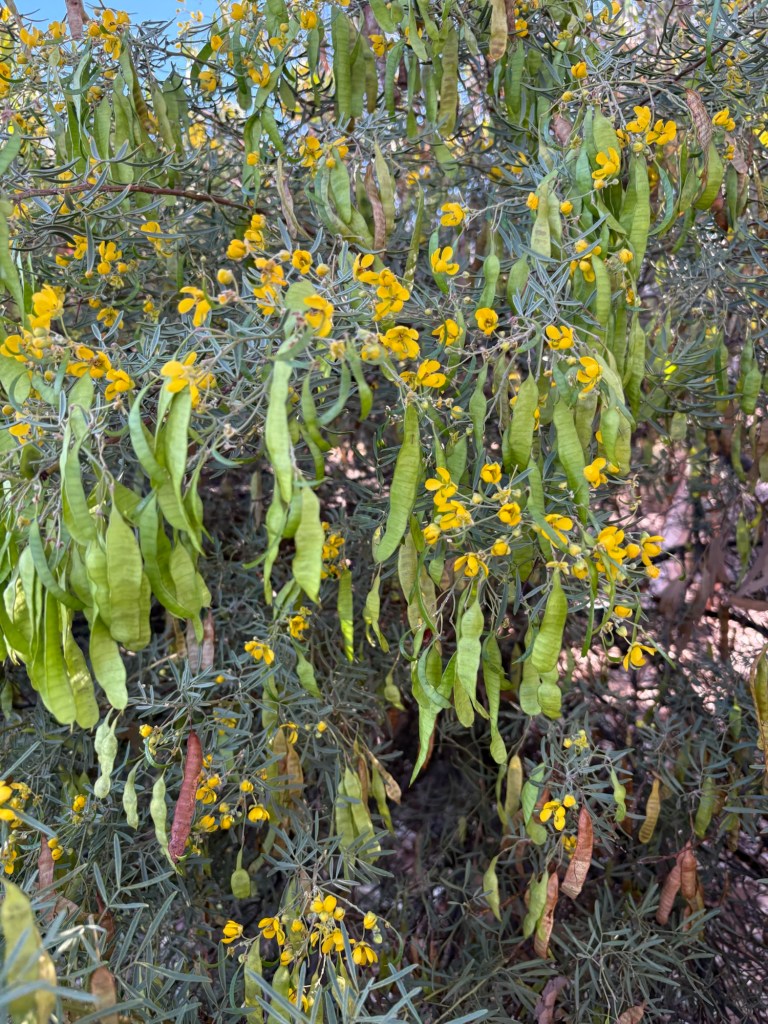
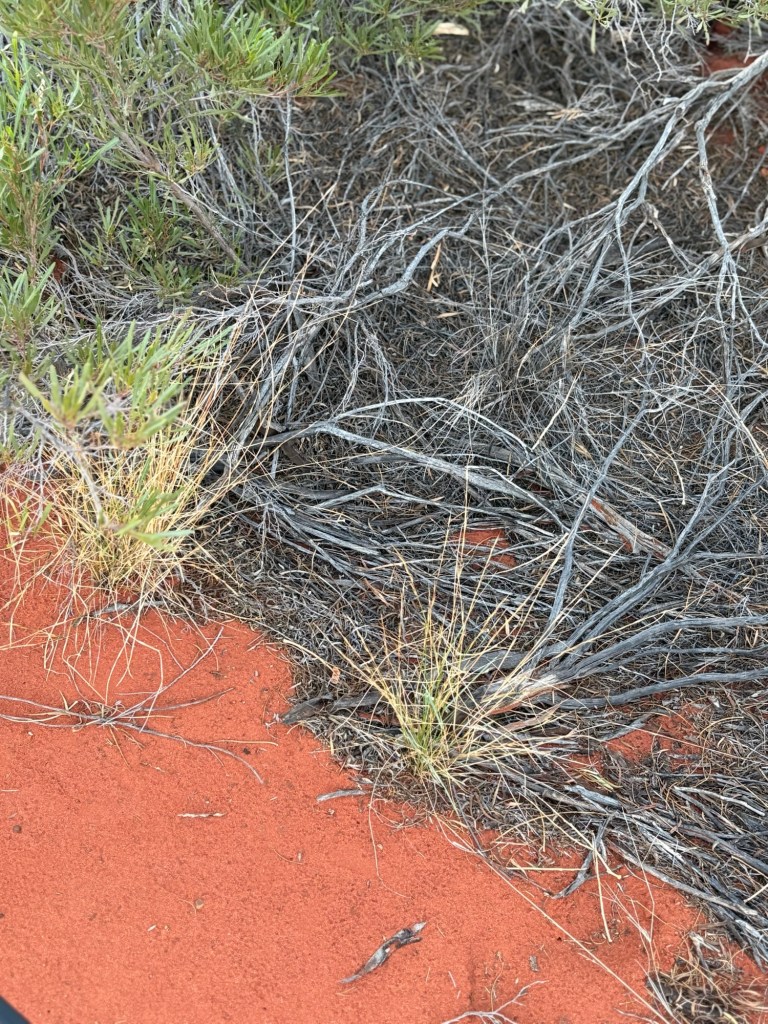
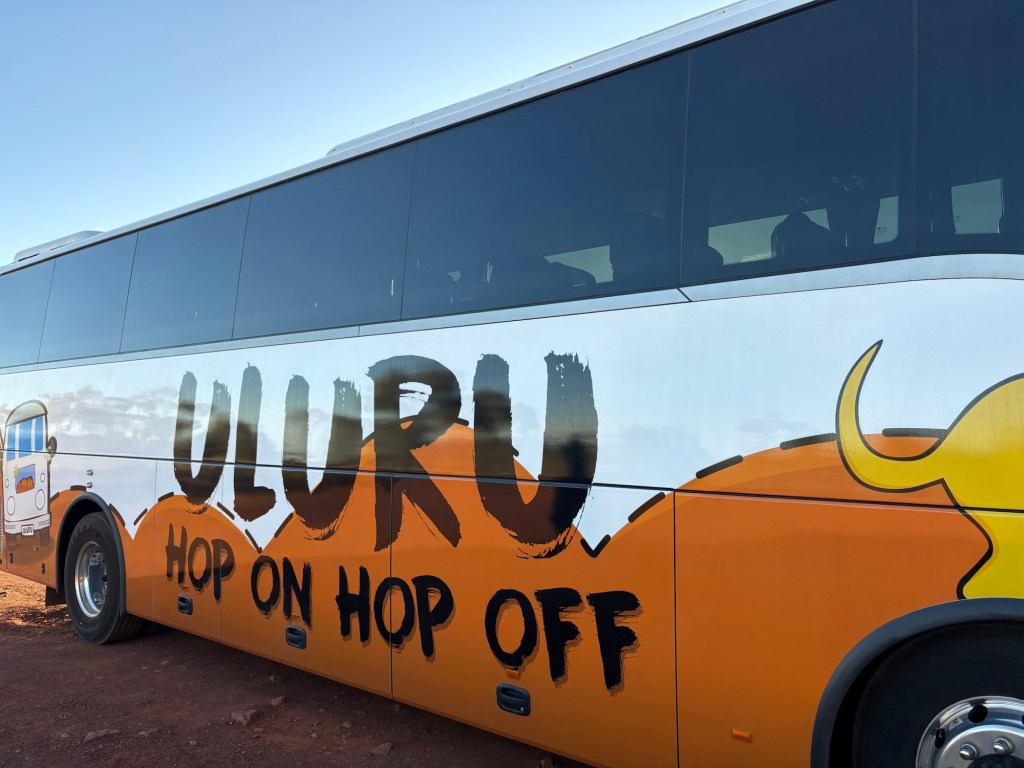
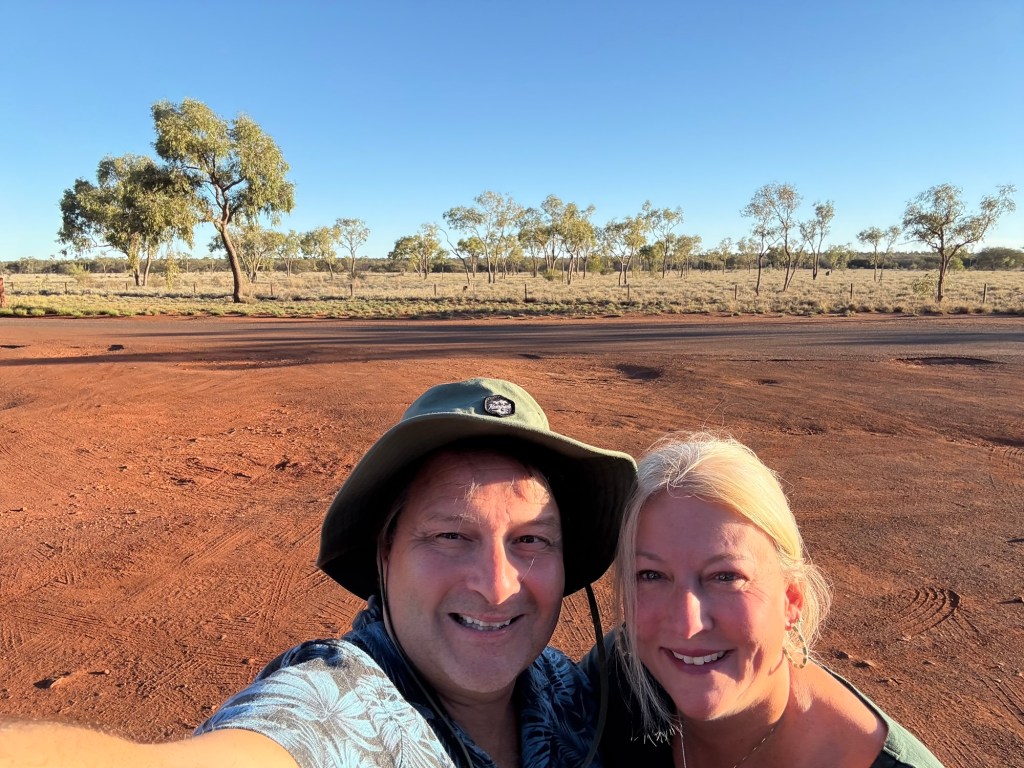
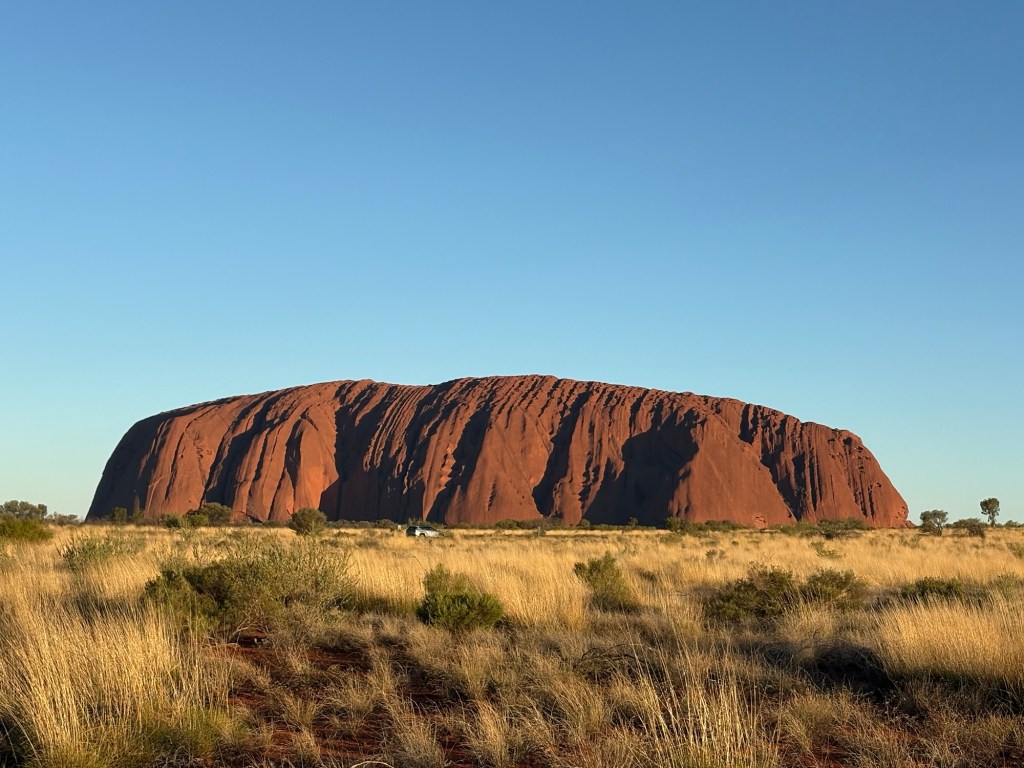
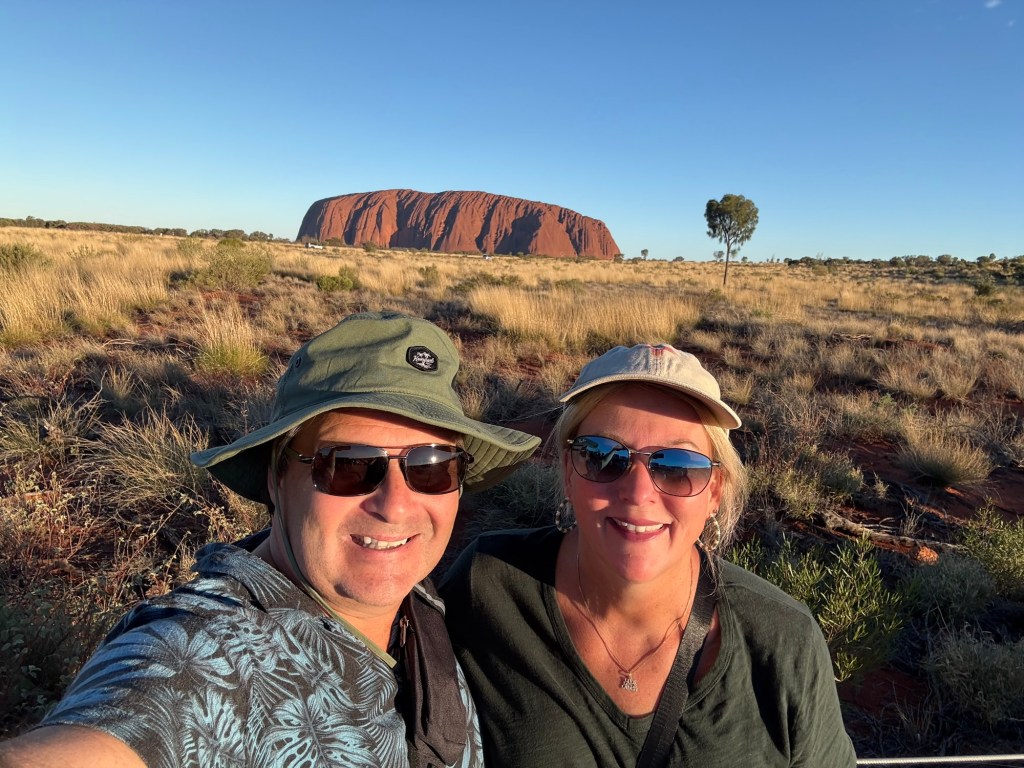
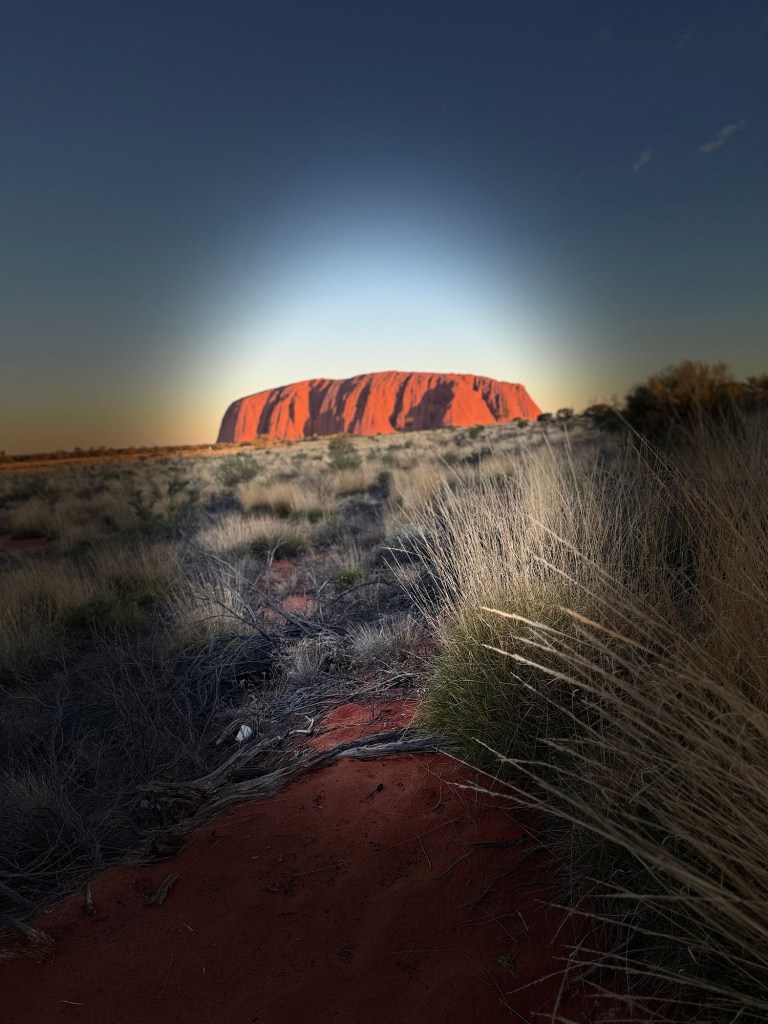
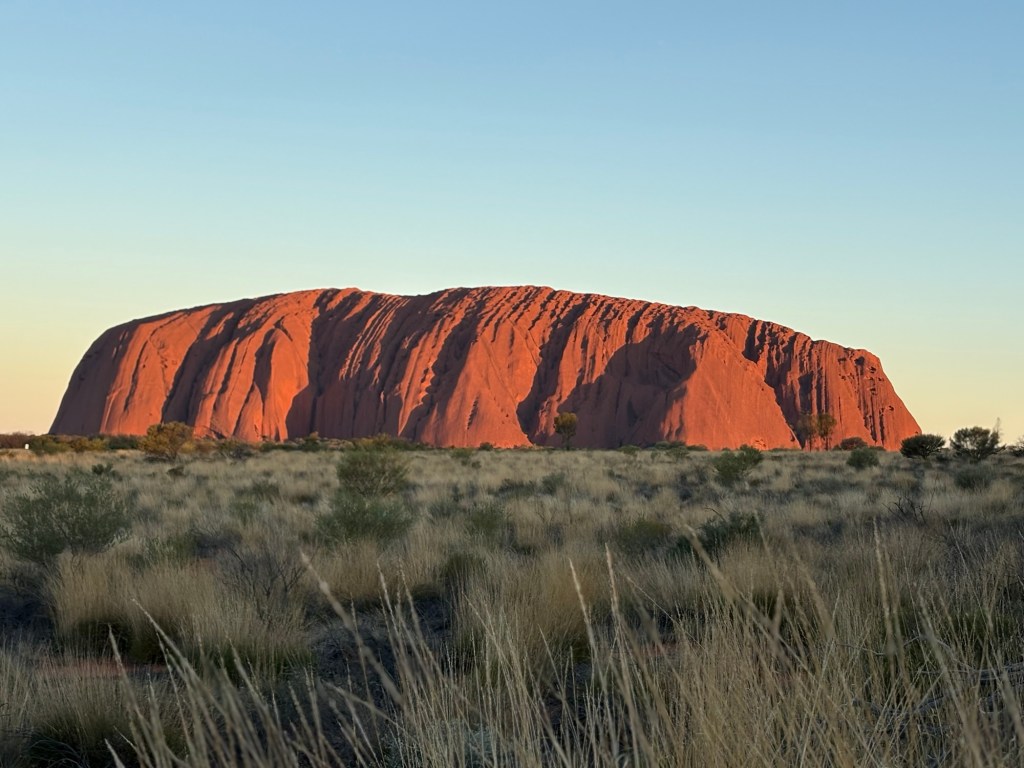
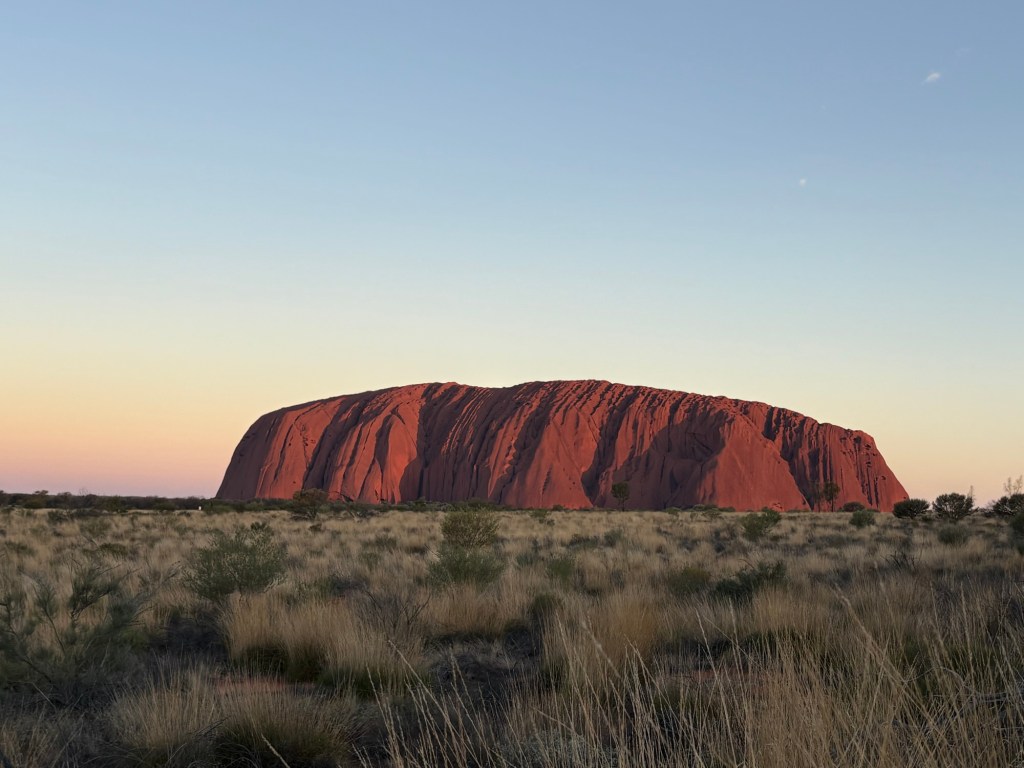
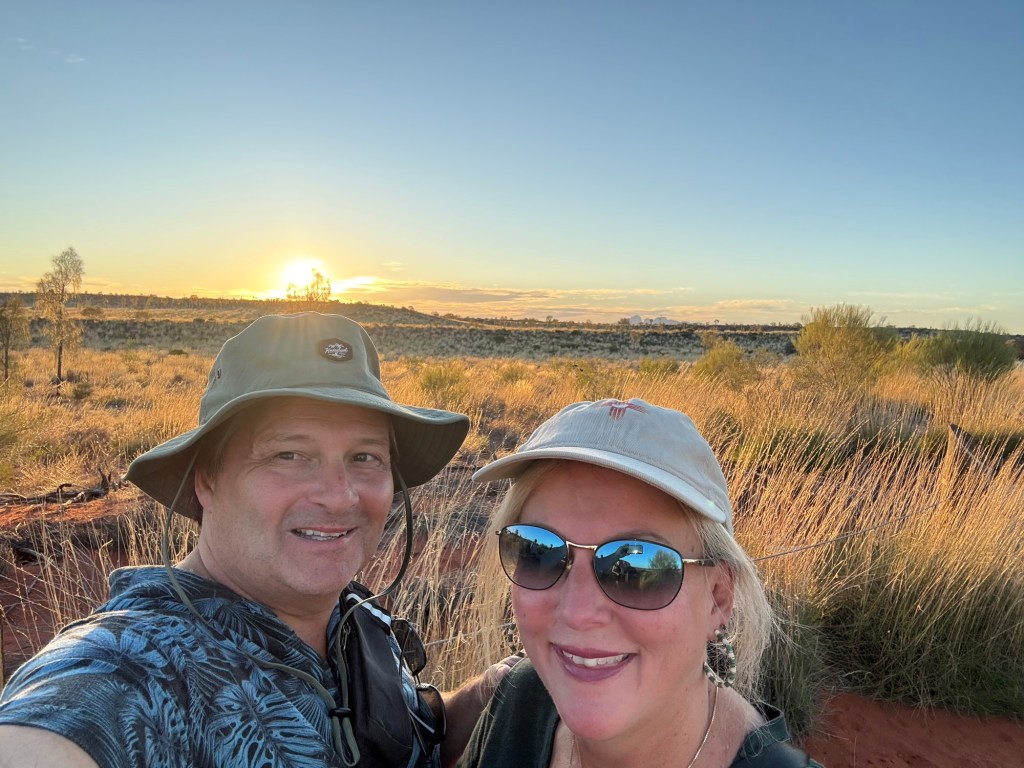
We had also signed up for the Hop On, Hop Off bus tour here on Tuesday (which is the only way to get over to the park unless you have a rental car), and Rob and I had decided to catch the bus out to sunset at the Rock. Sunset at Ayers Rock is supposed to be particularly spectacular as the light hits the rock and makes it appear to change colors as the sunset progresses. We agreed- it was pretty amazing!





Wednesday, 11/19/25
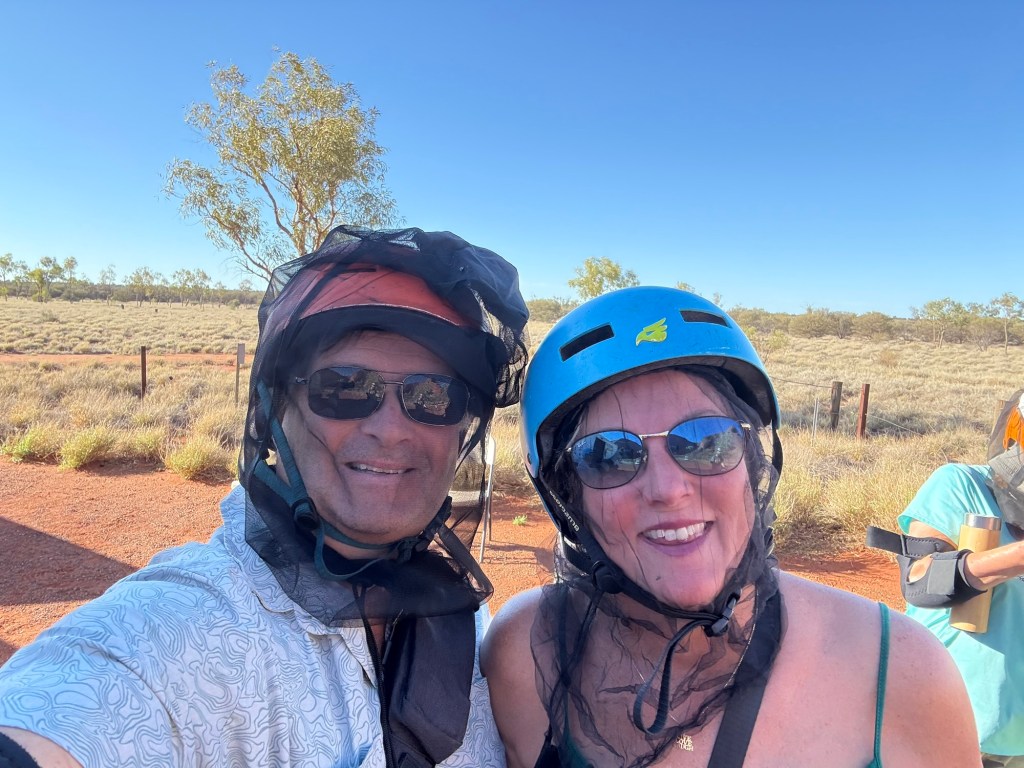
The next morning (Wednesday), we got up super early to head to our chosen excursion for the day, a Segway tour around the base of Ayers Rock! It is so hot here by mid day that most tour companies will only do early morning or early evening/nighttime tours here. We got suited up including full face nets (for fly protection) and headed to the 9 km path around the rock on our Segways. Rob and I have ridden them several times, so it was “like riding a bike”, with minimal re-learning needed, luckily.
After a tour that included riding and walking, I learned that desert life is truly for the most hardcore of the hardcore, which I am not. I salute the traditional custodians of the land, the Anangu (though we learned Anangu is actually the word that four different desert tribes collectively decided to name themselves so that white or non-Aboriginal people (“piranpa”) here have a way to reference them.) The heat, flies, and dust were brutal as Australia heads into the summer months.

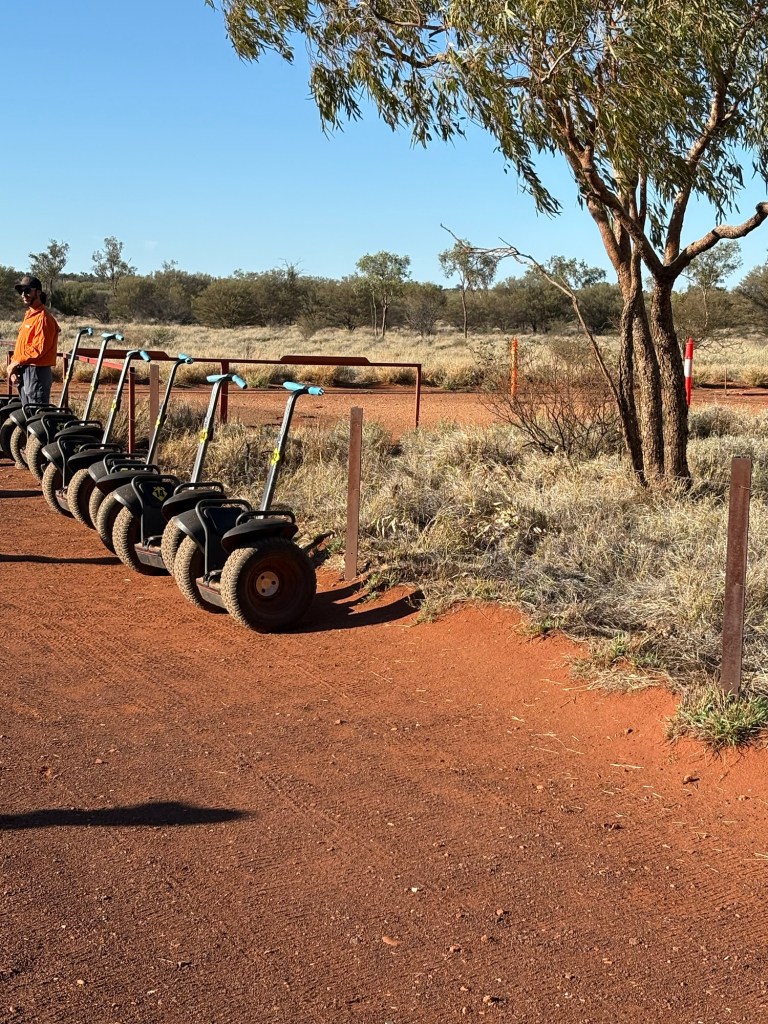
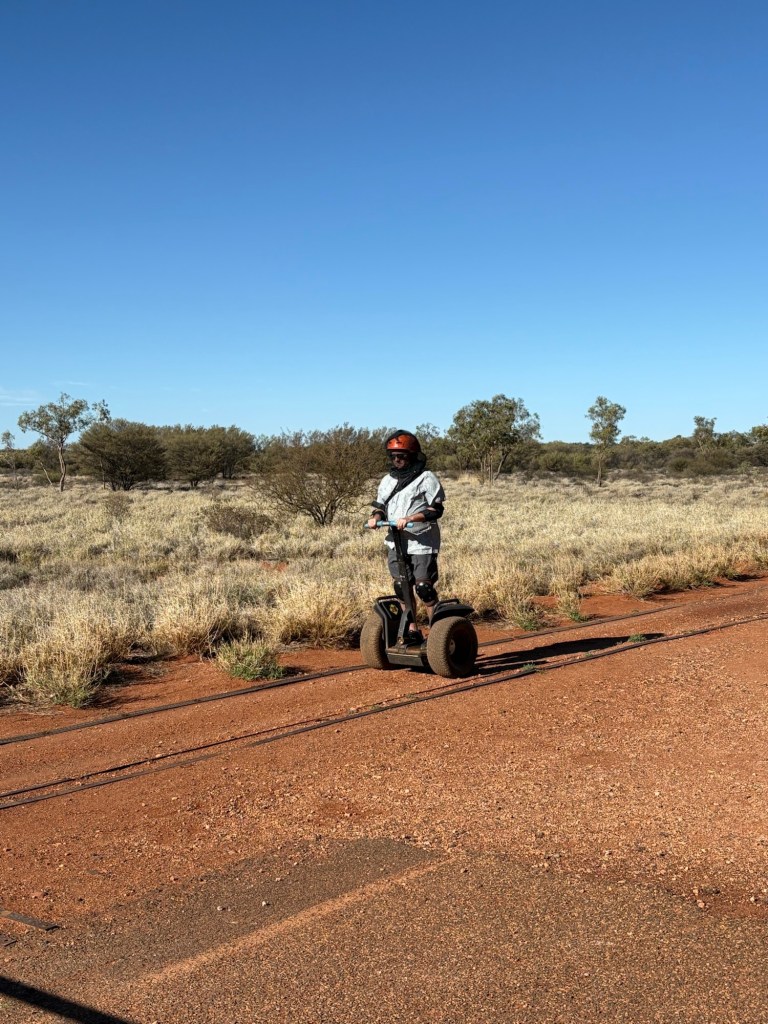

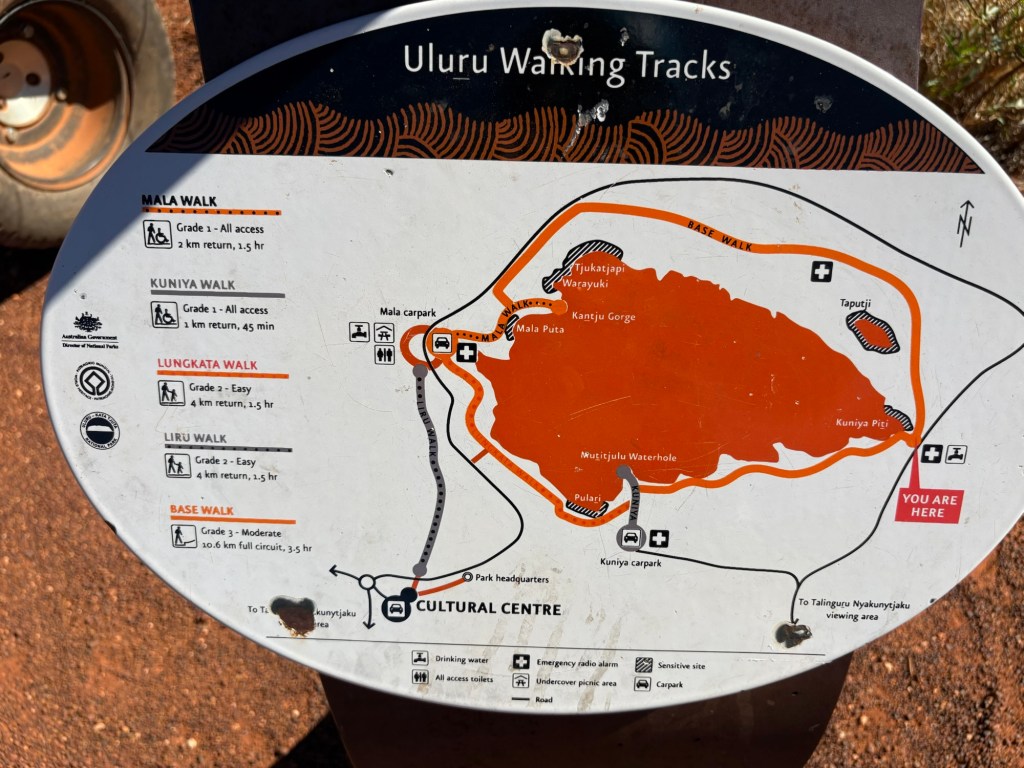
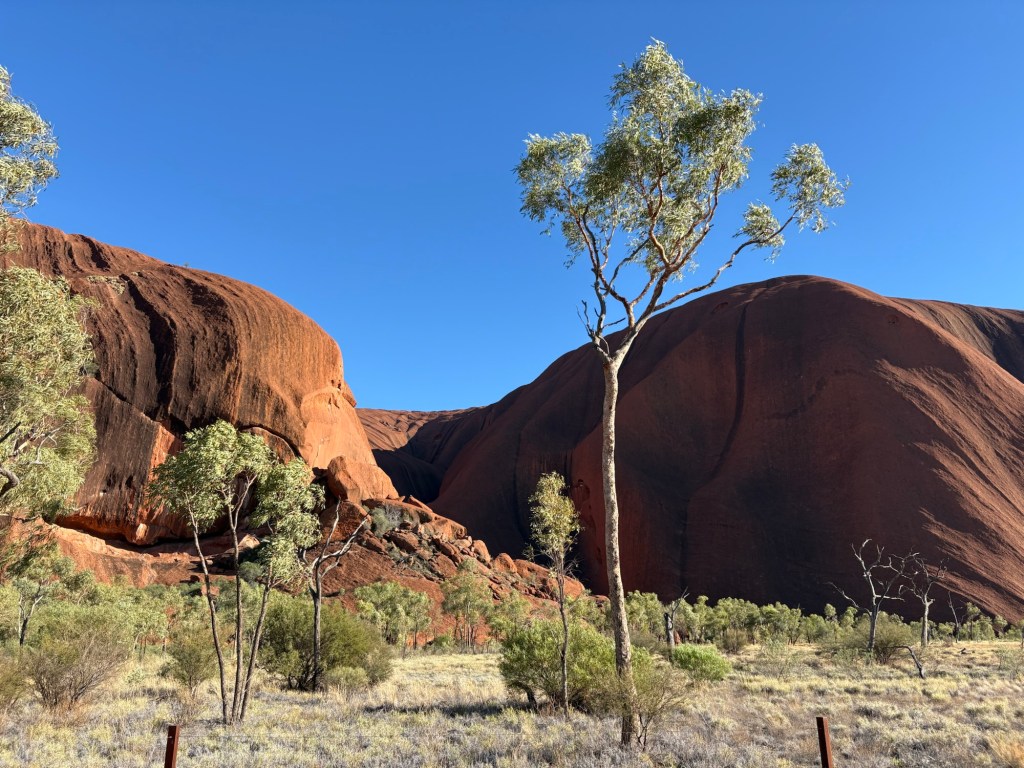

There are large sections of the rock that are still in use as sacred and ceremonial sites for the Anangu. Some of these are sub-divided into “men’s business” and “women’s business” sites. The sacred sites are not allowed to be photographed by anyone, and women are not allowed in or near the men’s site unless escorted past, and vice versa. They have some non-ceremonial sites that we are allowed to walk by and see. When the current people here are having their ceremonies, the paths and even the roads near the sacred sites are blocked off to visitors. We also saw some very old cave art here.
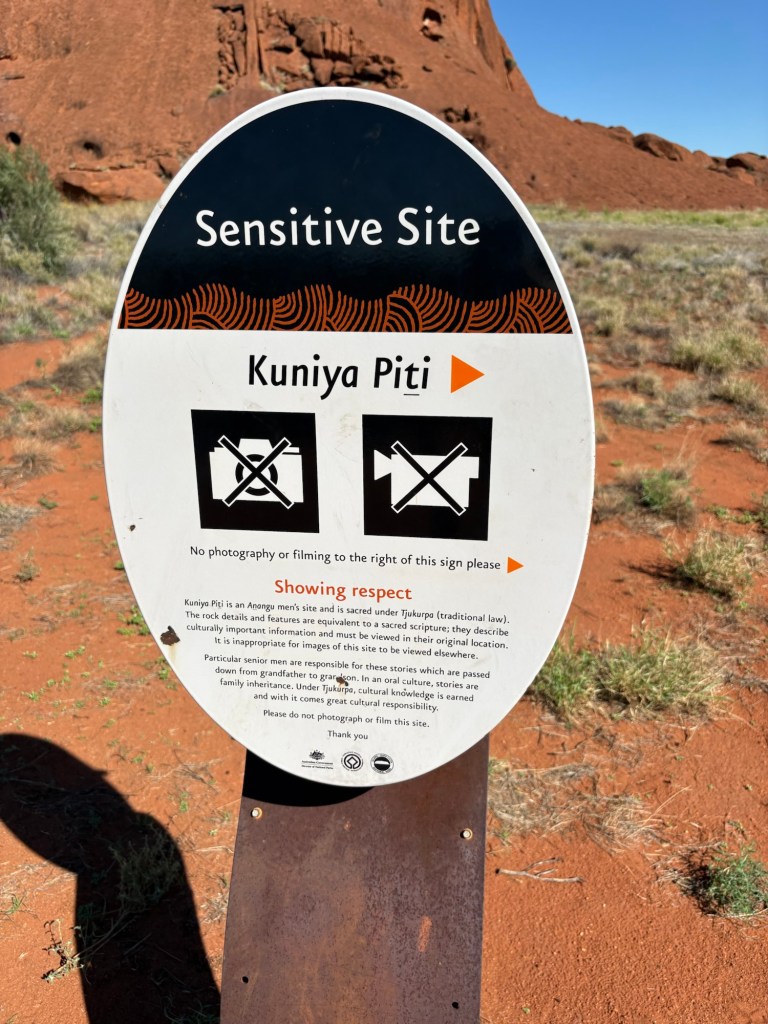
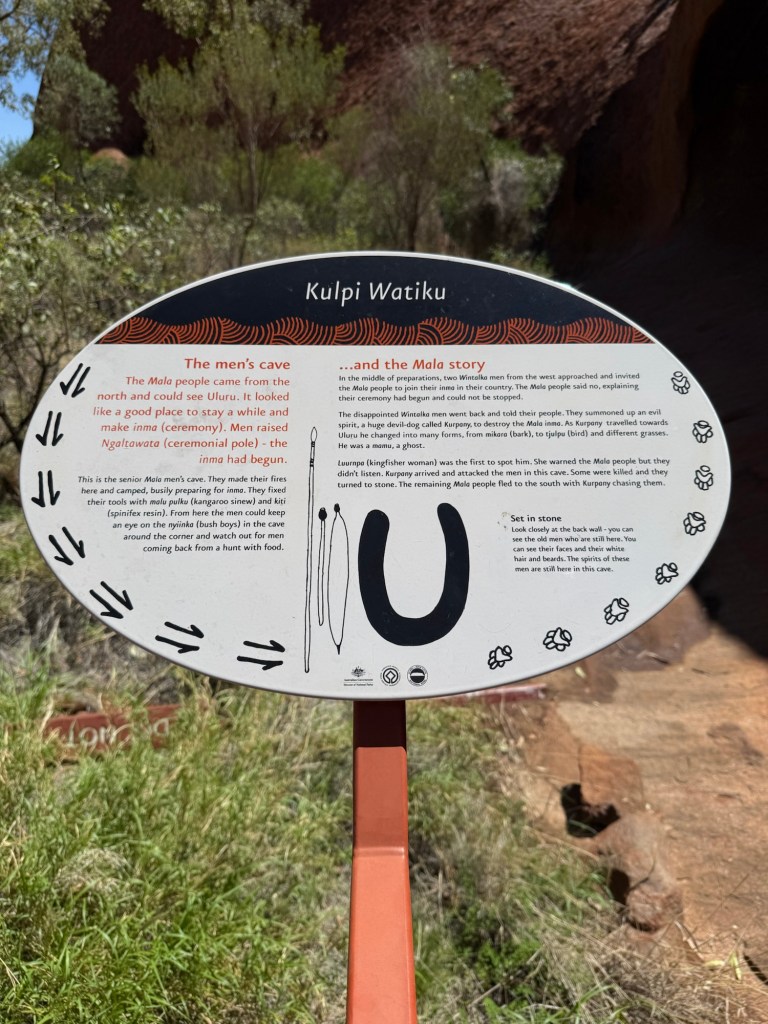
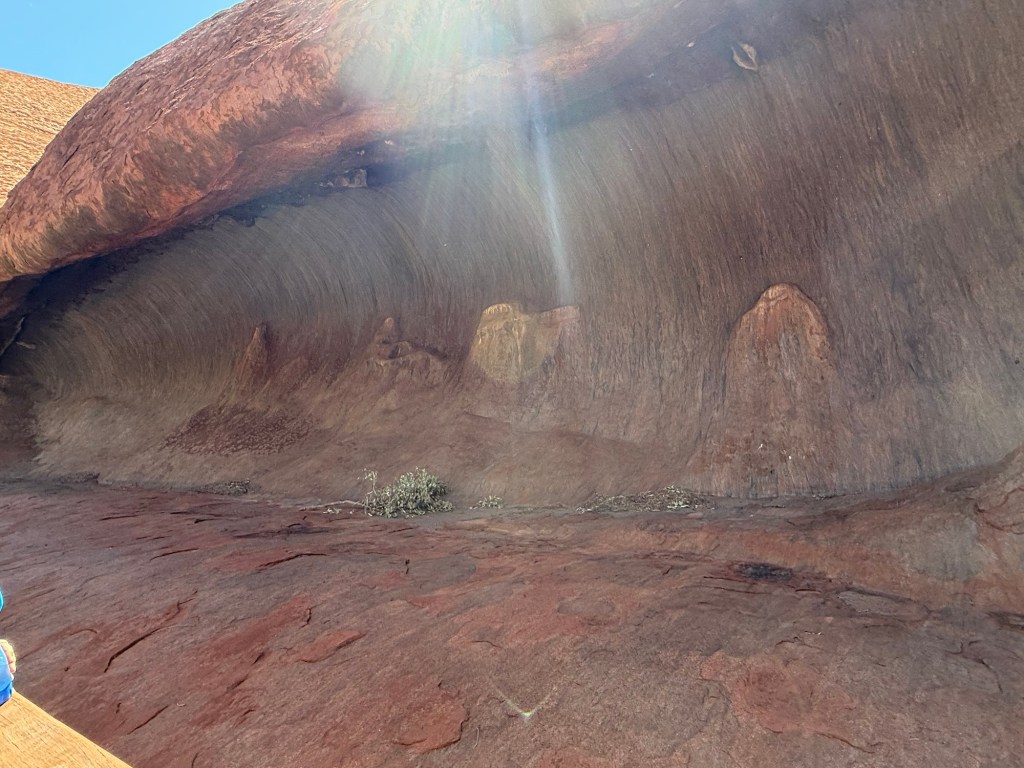

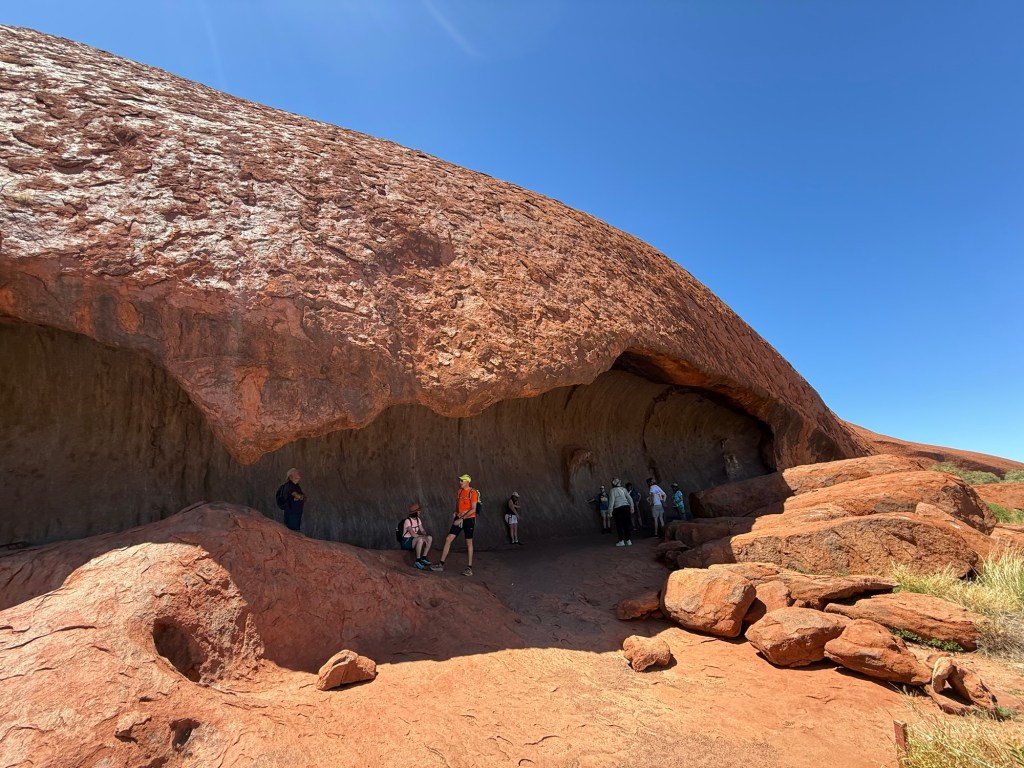
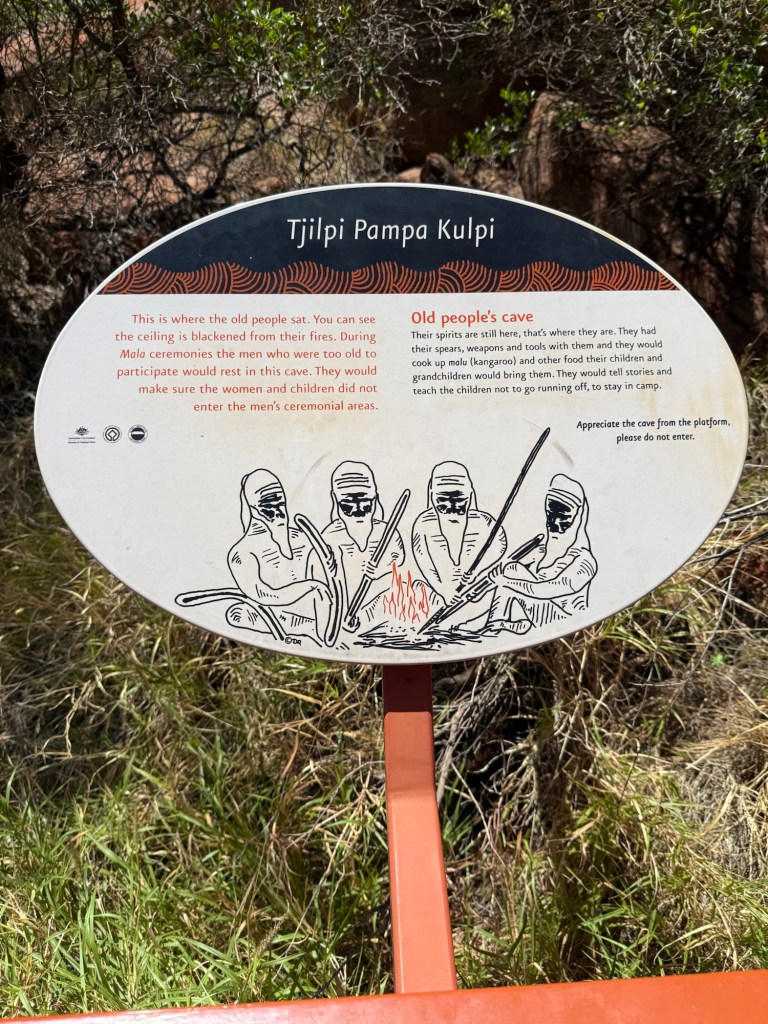
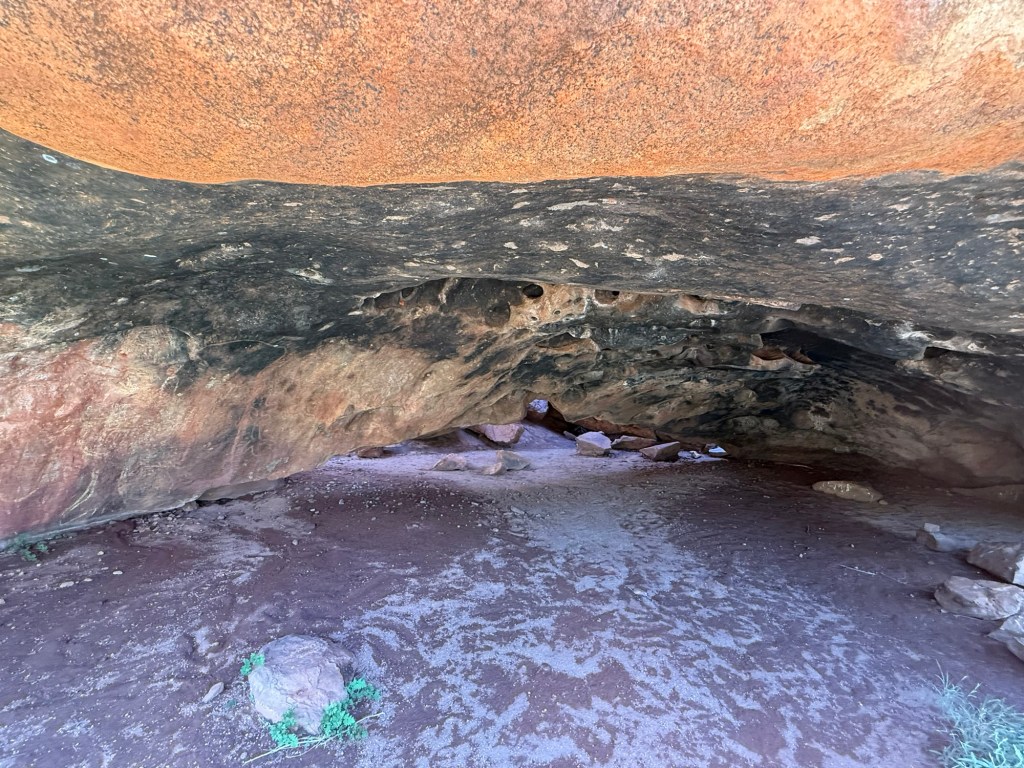
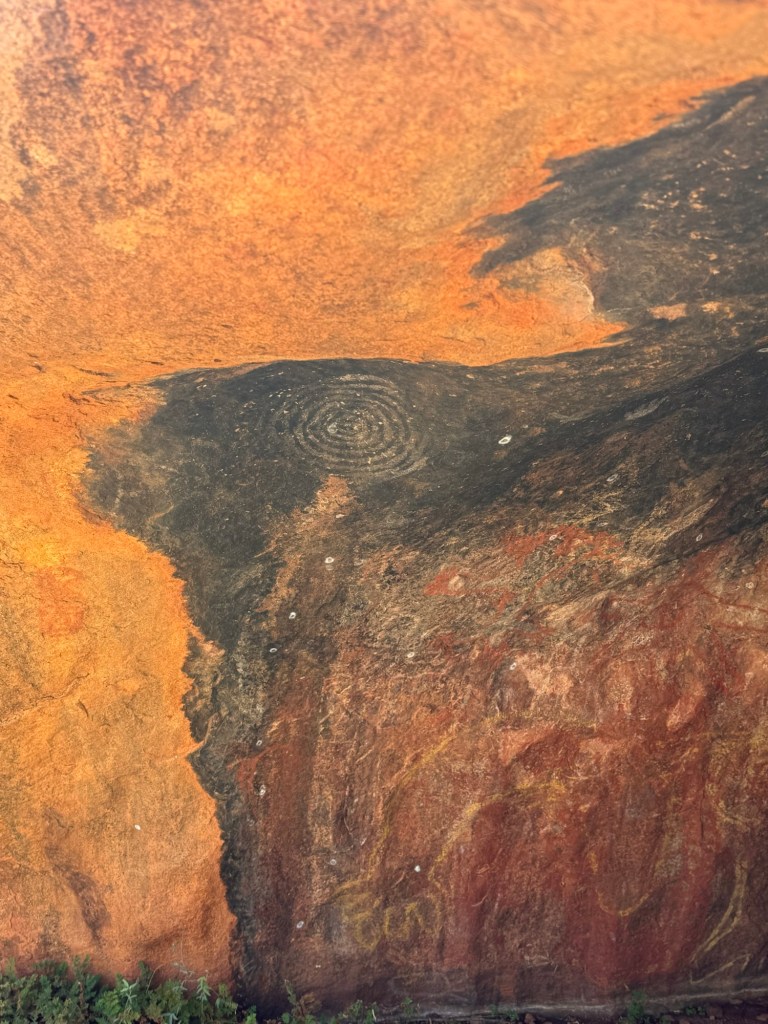
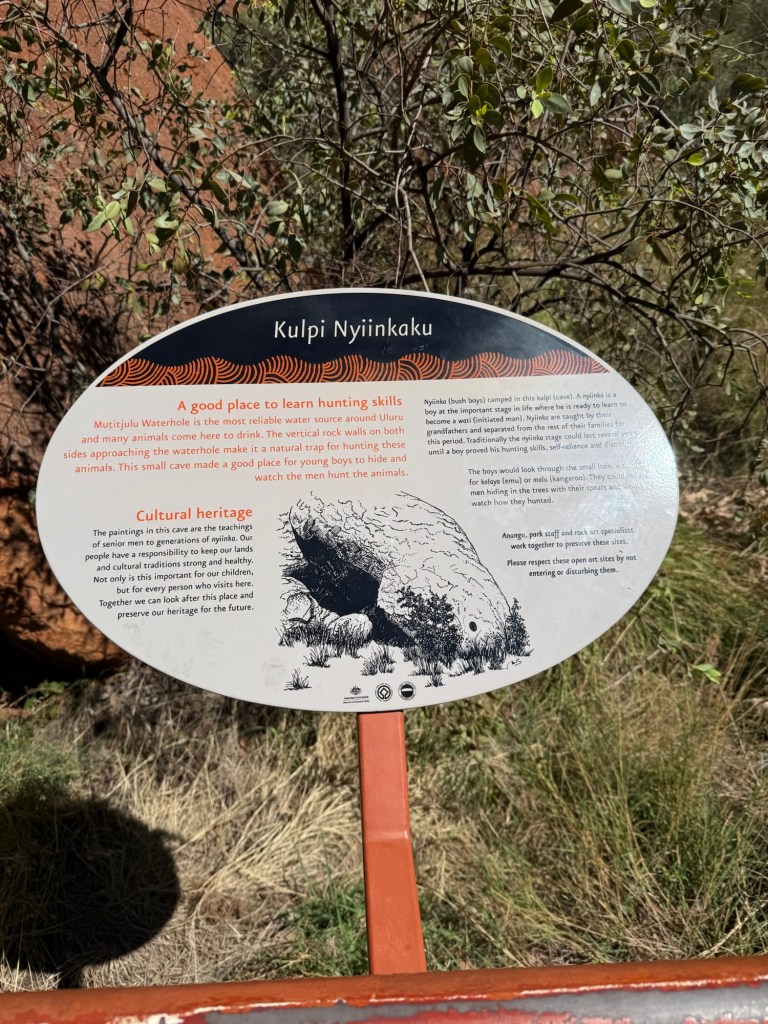
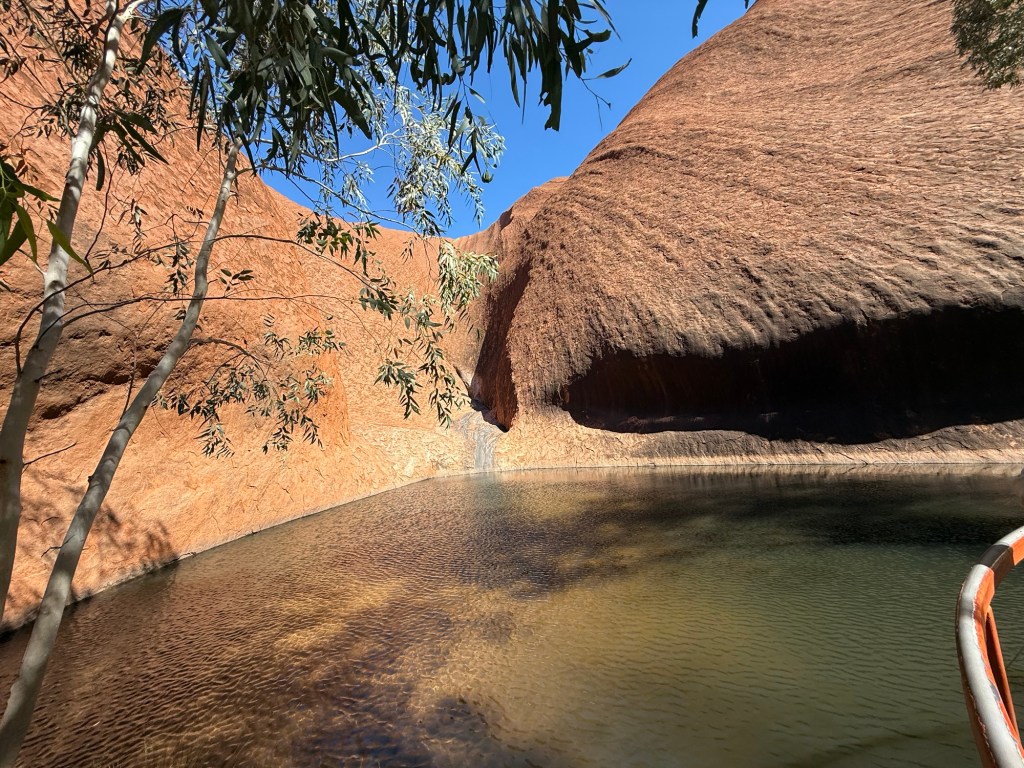
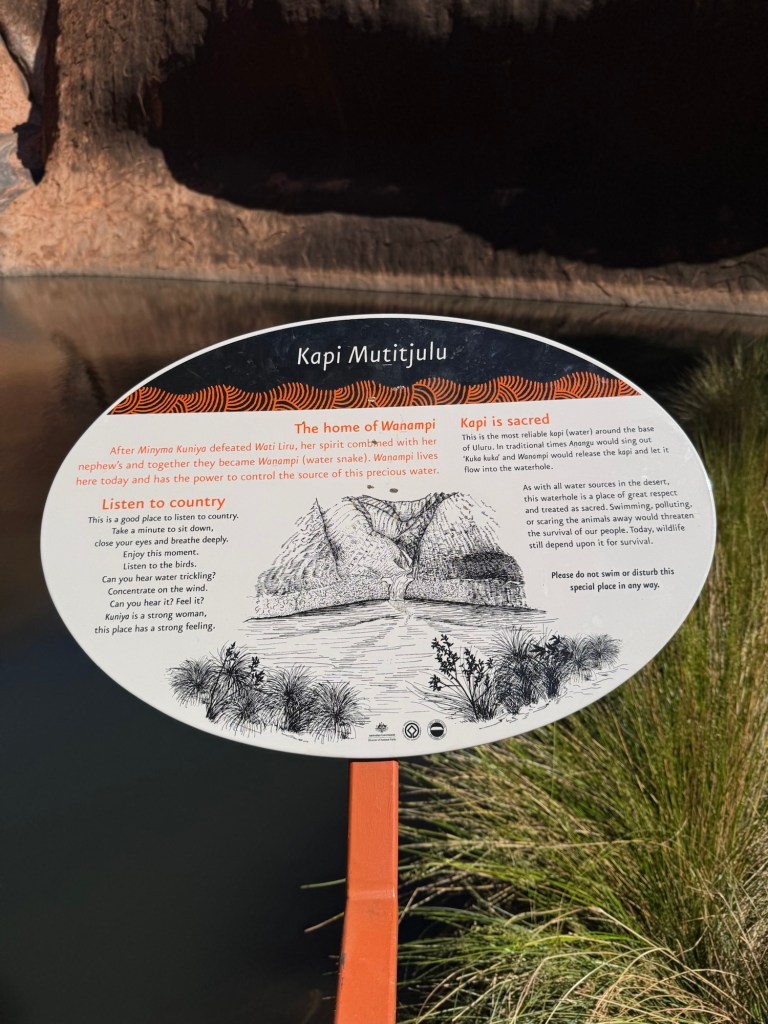
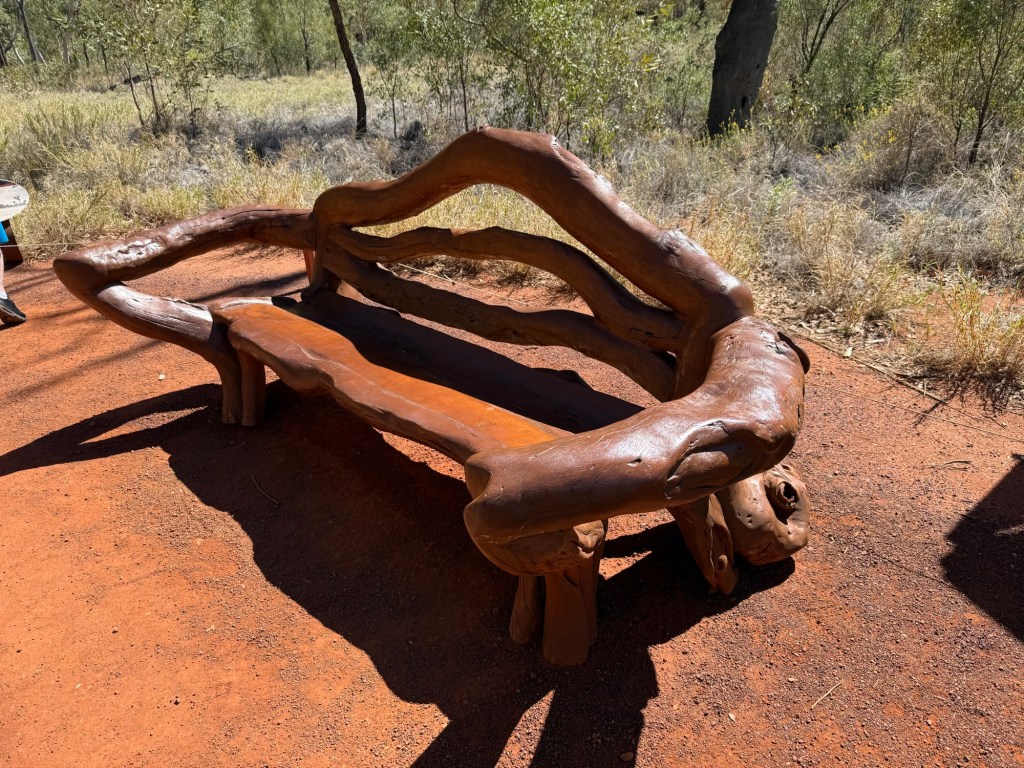


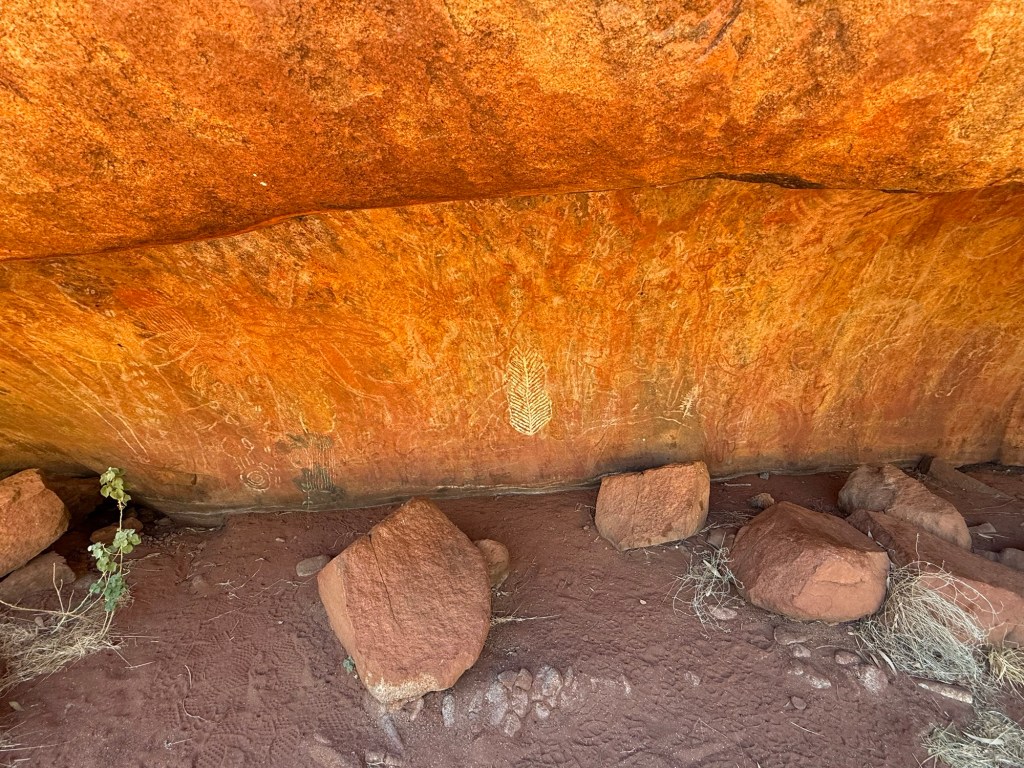
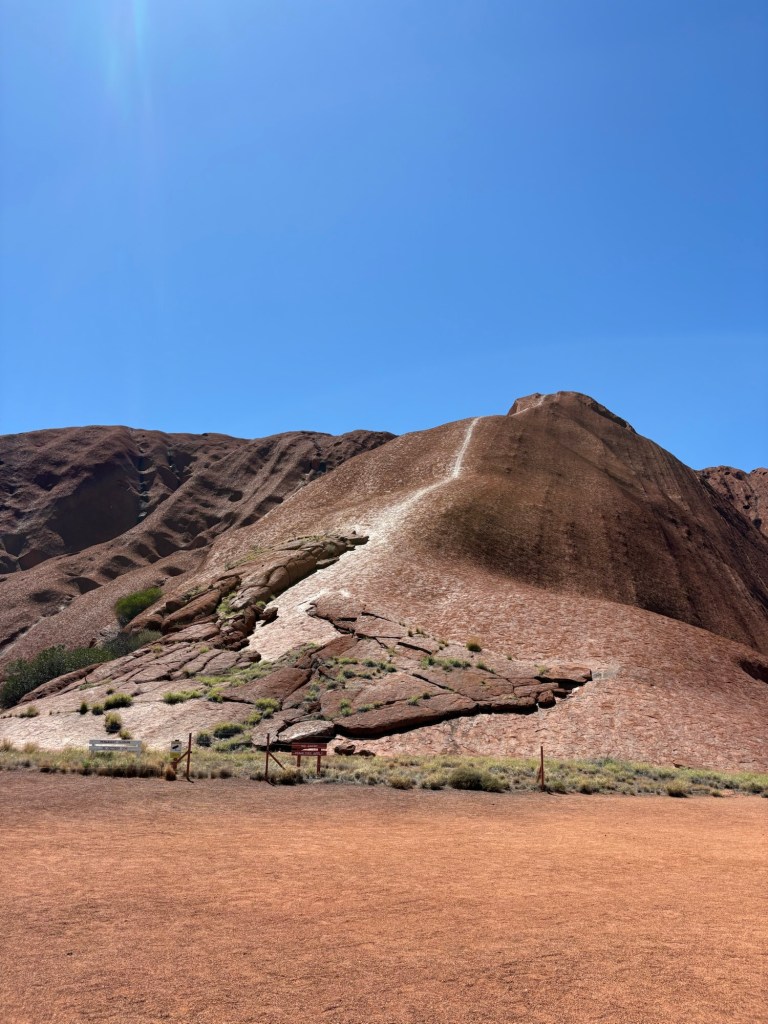
We had hoped to see some wildlife here (they have FERAL CAMELS-squeeee!), but no luck other than birds. Our guide took us on several walks after the Segway tour, including showing us the “scar on the mountain.” This “scar” developed when from the 1960s until 2019, the Australian government opened up Ayers Rock to rock climbers in an effort to increase tourism. The climbs led to the deaths of over 200 people, poor sanitary conditions on the mountain due to lack of trash and bathroom facilities, and outrage by the indigenous people who (rightly) believed their sacred site was being desecrated. Sad story, but at least now they no longer allow people to climb the rock.
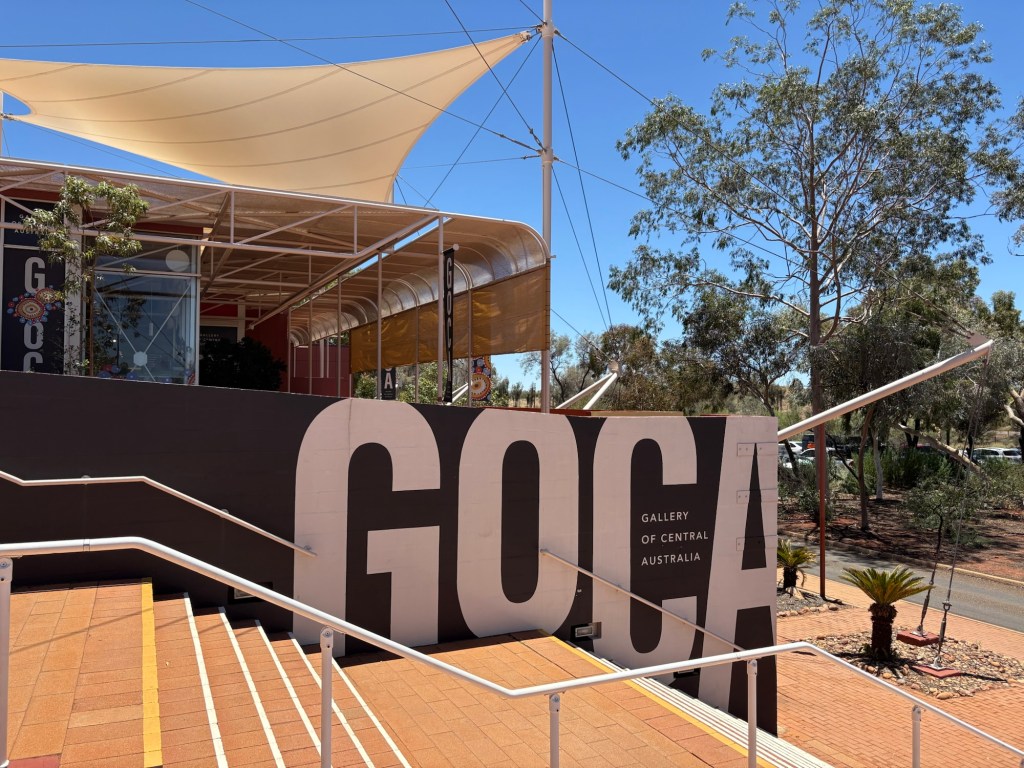
After our tour, they returned us to the resort and we grabbed some lunch, and took a walk through the art gallery of Central Australia, which has some very nice indigenous art works. A swim in the cold pool was also a must before we conked out for a mid afternoon nap in the heat of the day, just like the locals!
Evening was dinner at one of the small cafes in the resort and a mellow evening, as we were still tired out from sun and fun this morning.
Thursday, 11/20/25
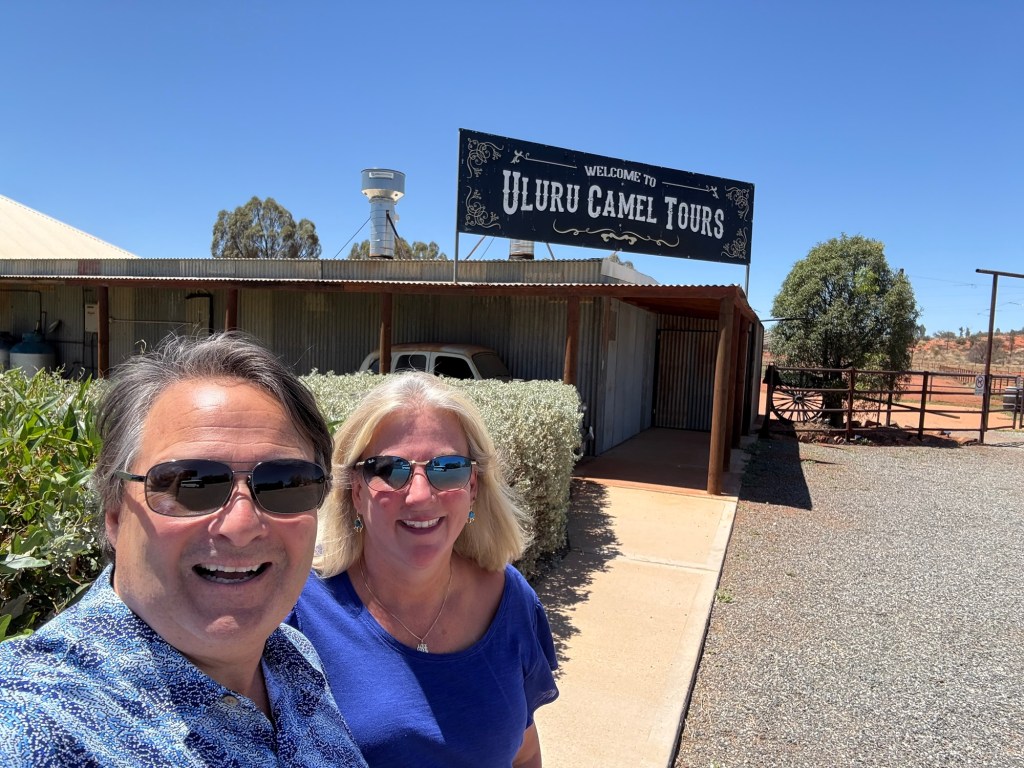
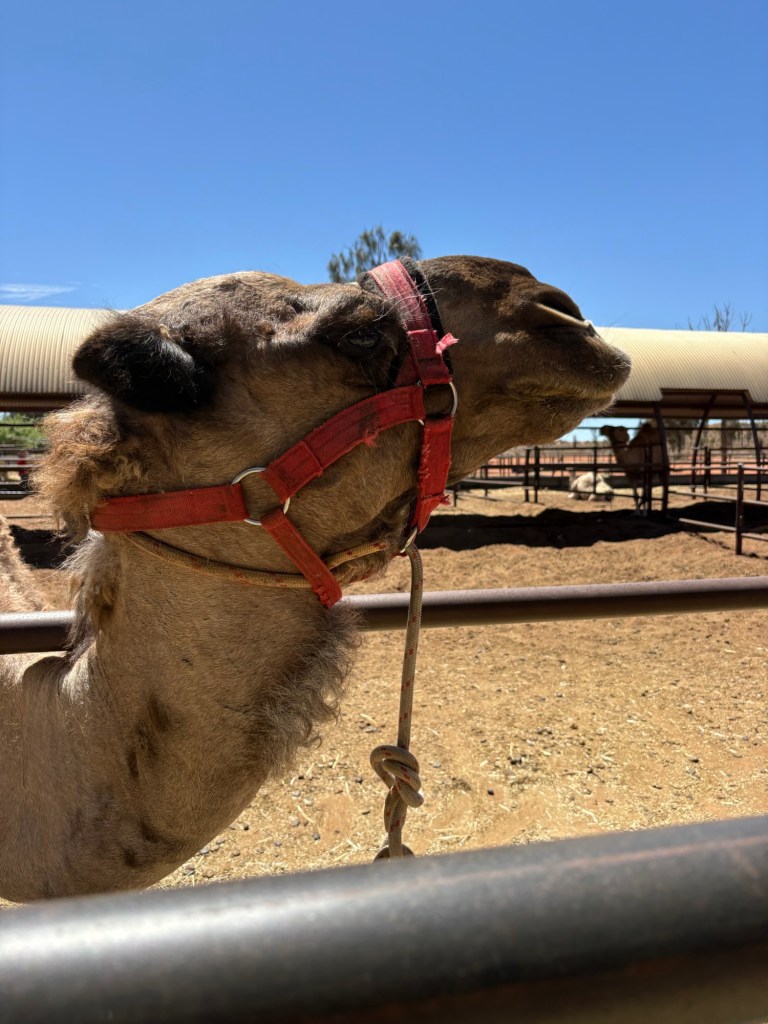
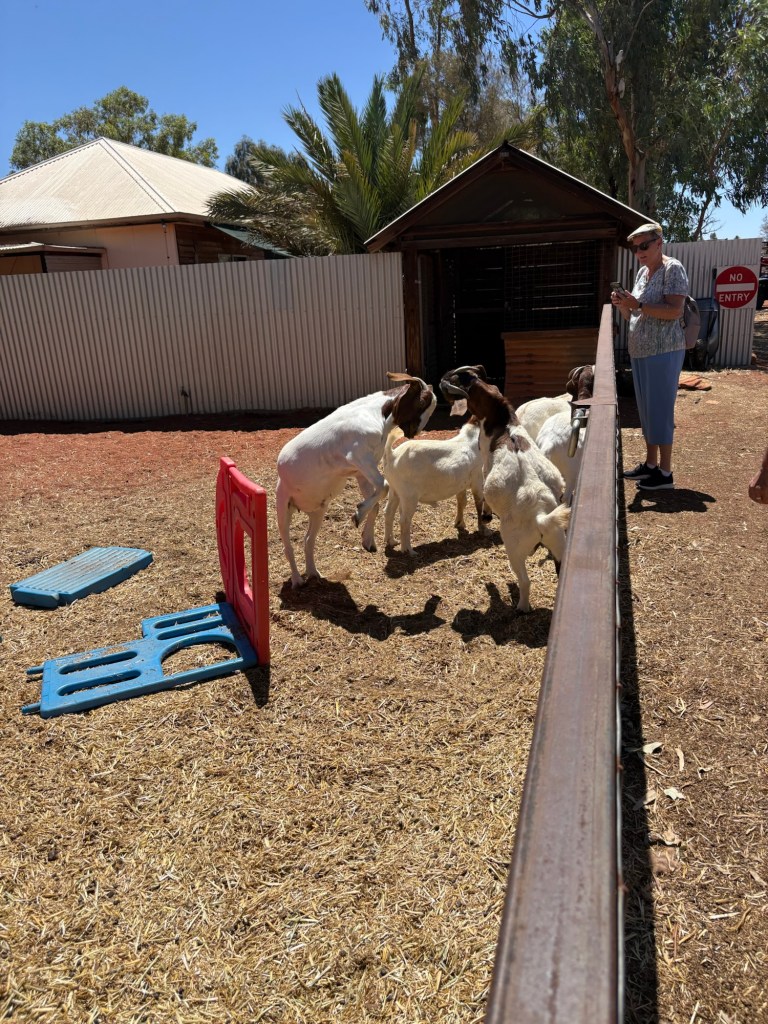
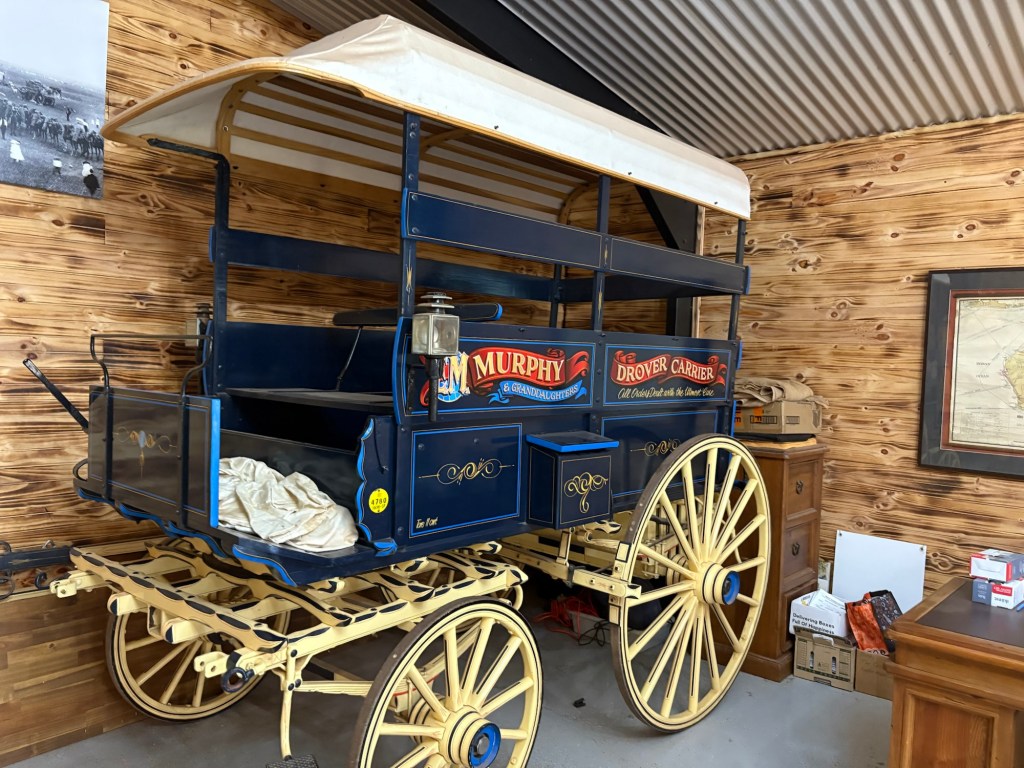
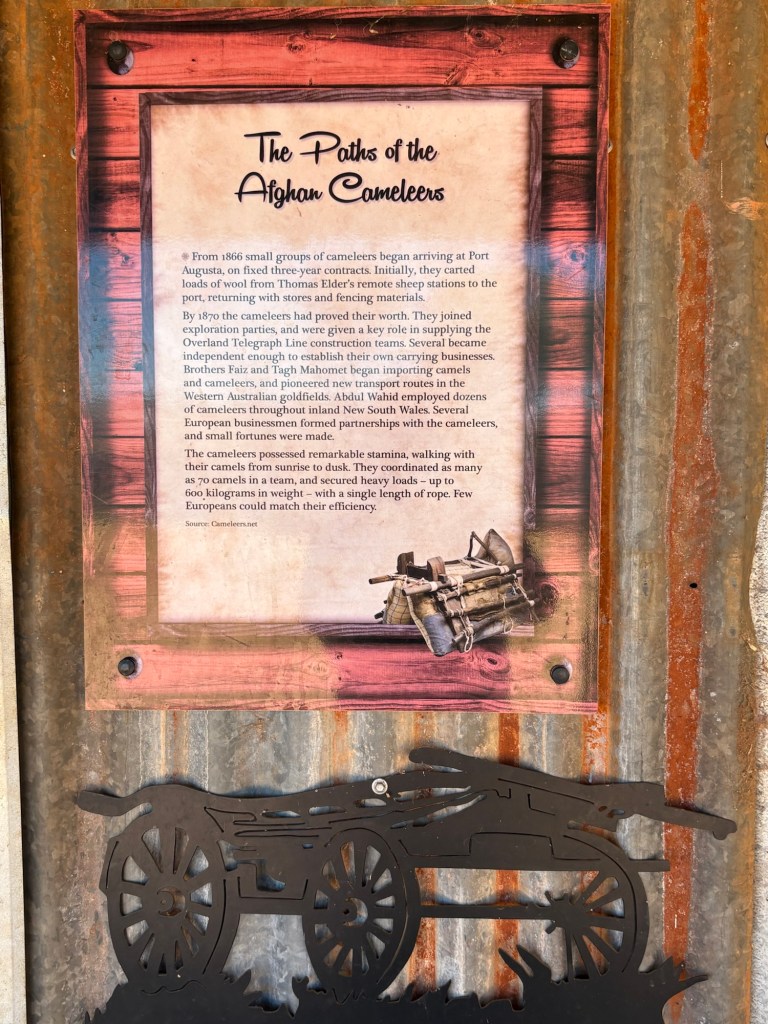
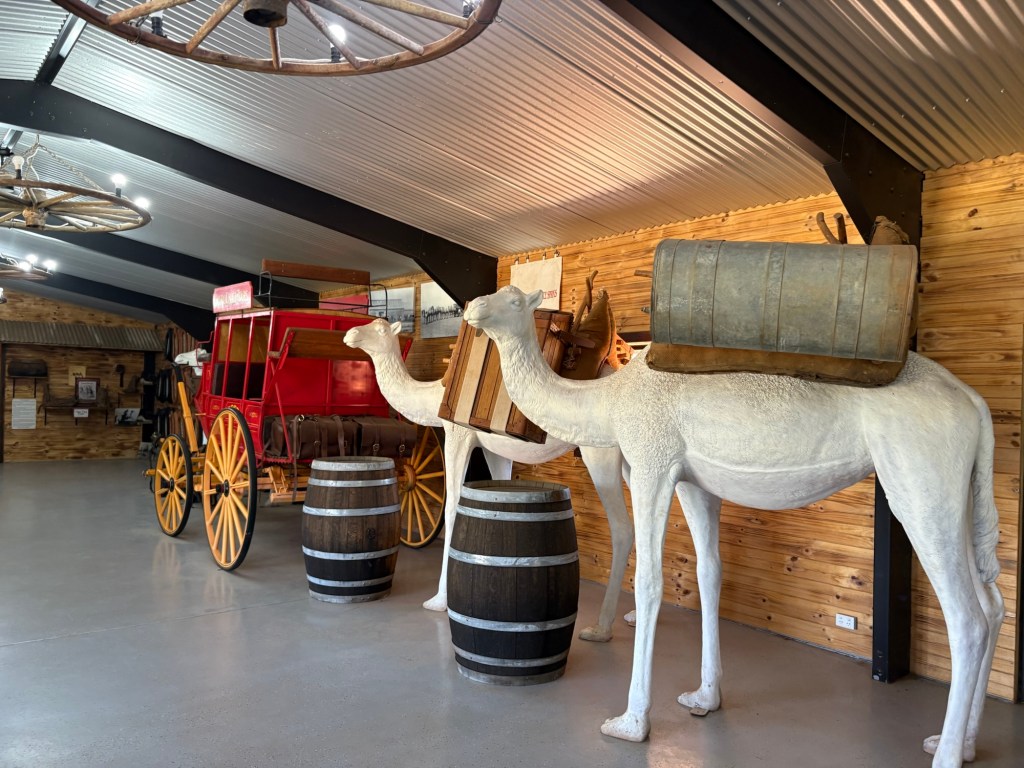
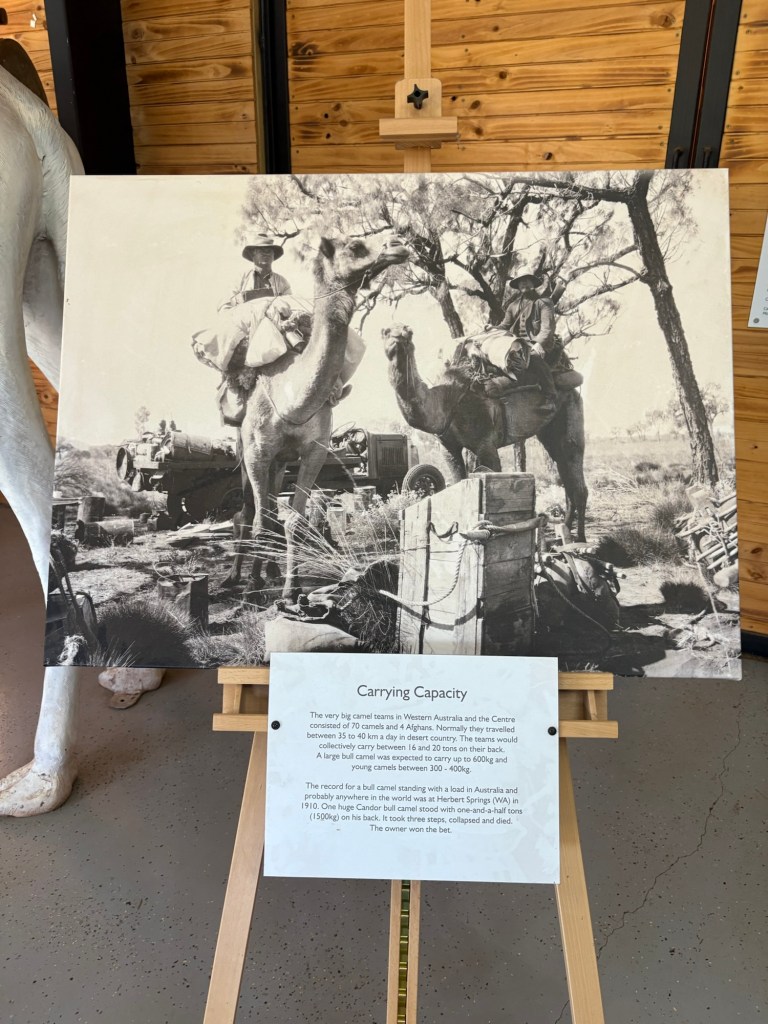
It’s checkout day, but our 2 pm flight left a little more time for fun, so we decided to head out to the resort’s Camel Farm so I could console myself for not spotting the feral camels yesterday. 😂 The heat was pretty prohibitive today (farm thermometer said 102 when we arrived), but we still enjoyed a brief visit with the farm animals. They have goats, cows, and a kangaroo, in addition to their camels here. Some of the animals let us give them some good skritches. They also had a museum with a history of how camels helped shape the Outback and were important for labor, particularly in building The Ghan (the only train that runs in the Outback). We declined the camel riding tours in deference to the heat. 😂




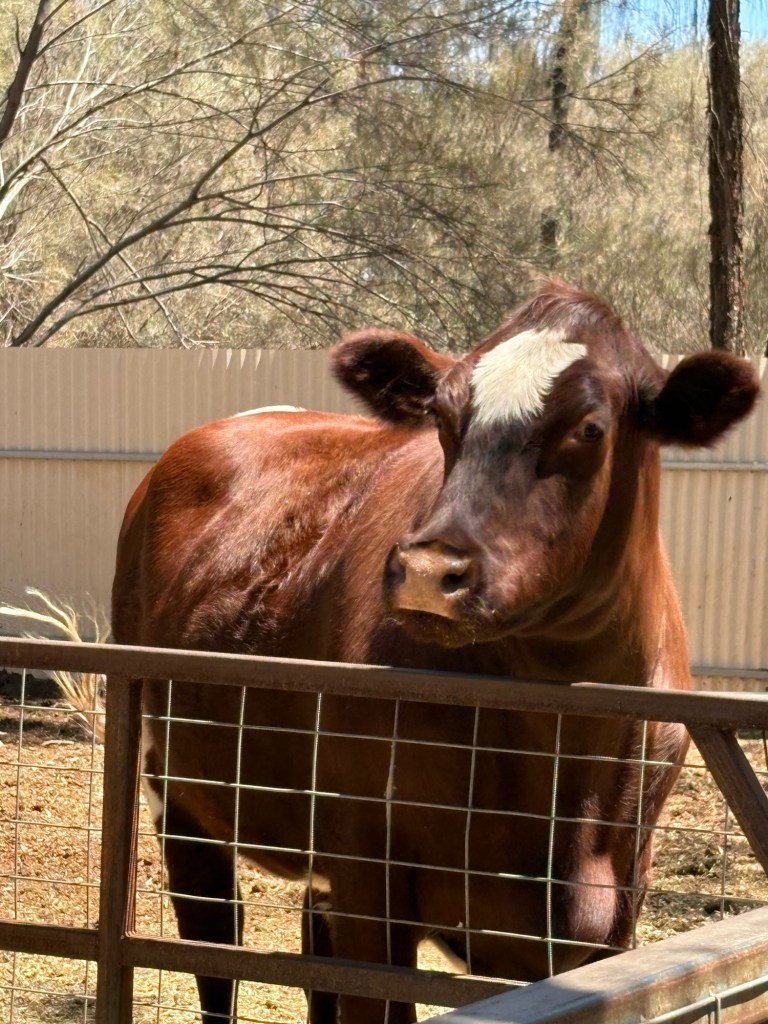
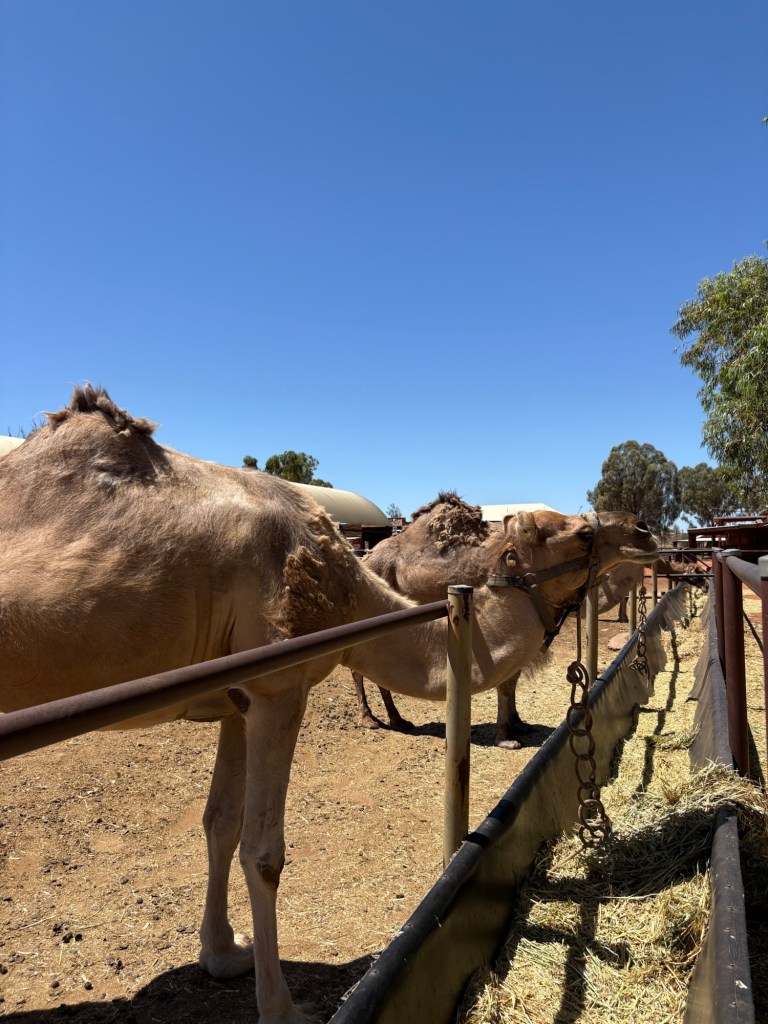
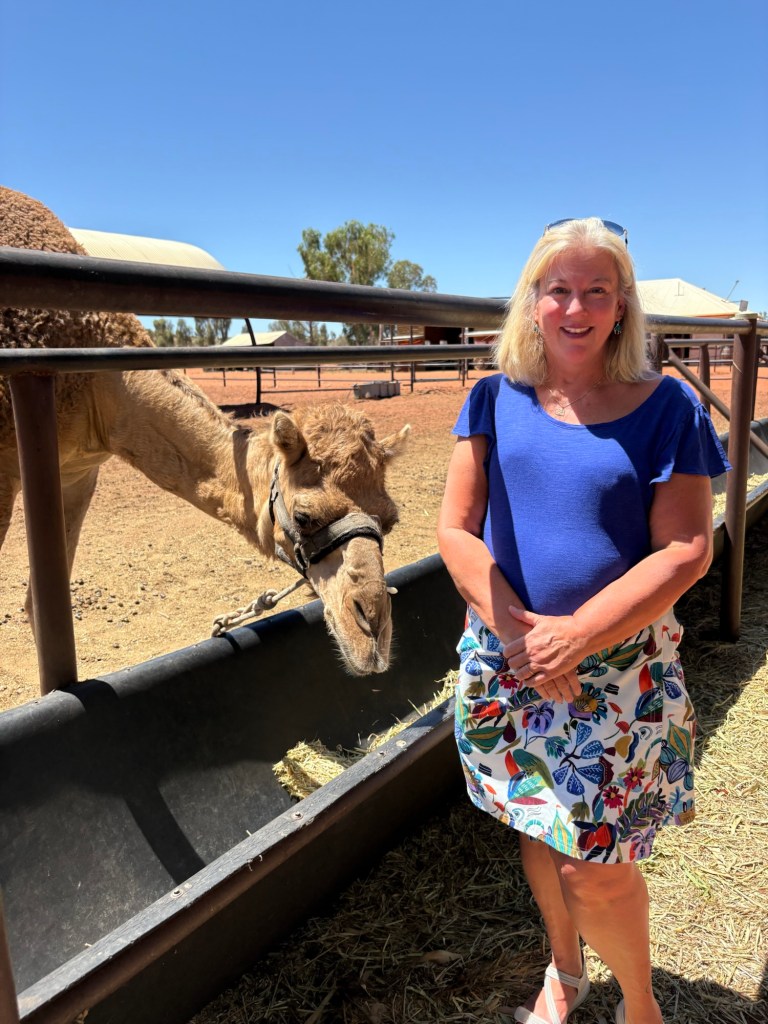
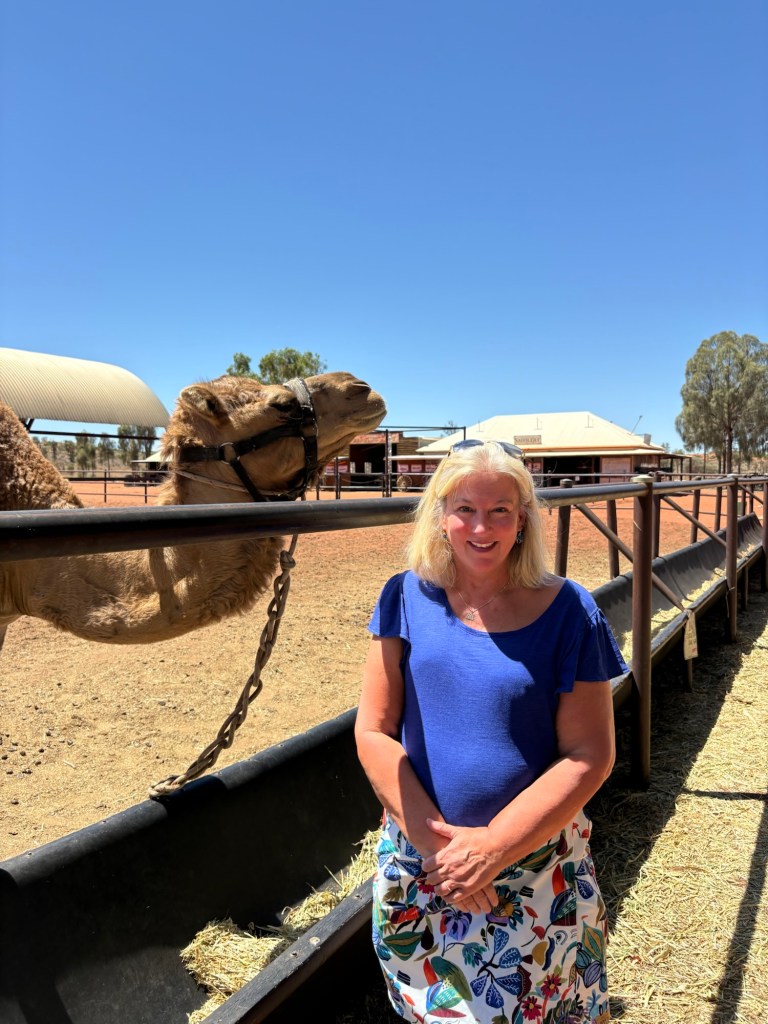


Some videos of our farm friends:
Now it’s time to leave the Outback behind, and head back to big city life in Sydney! We have a long day of flying because we have to change planes in Melbourne instead of flying direct, but it’s all good… we’re retired!! 😂❤️🎉

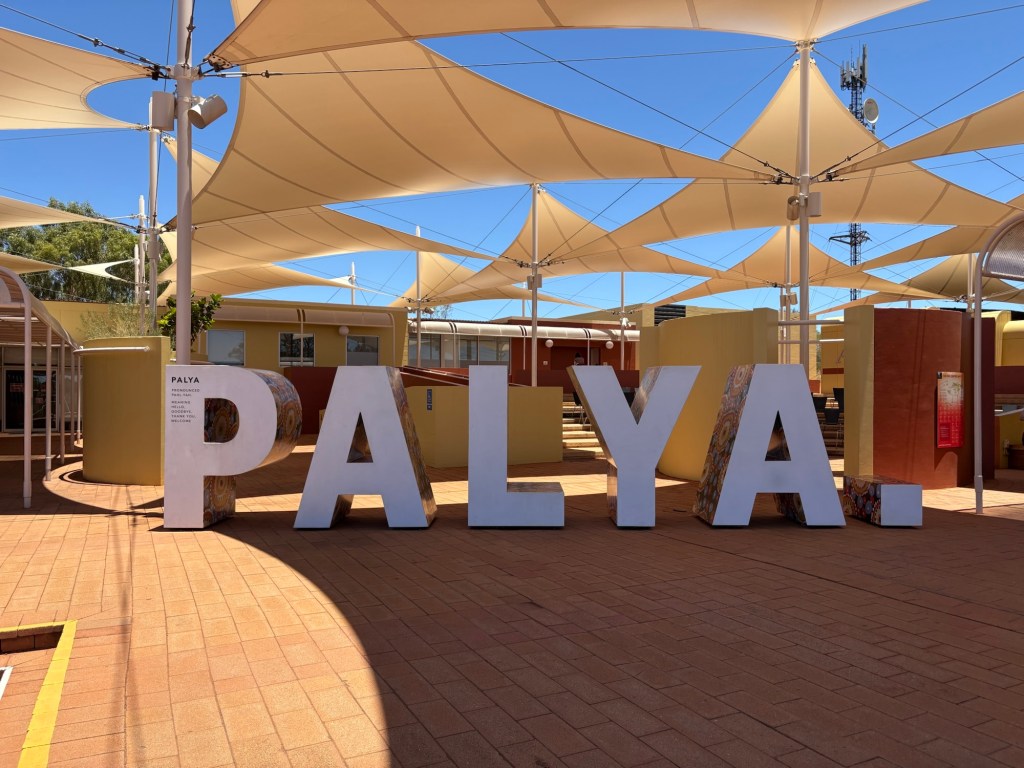
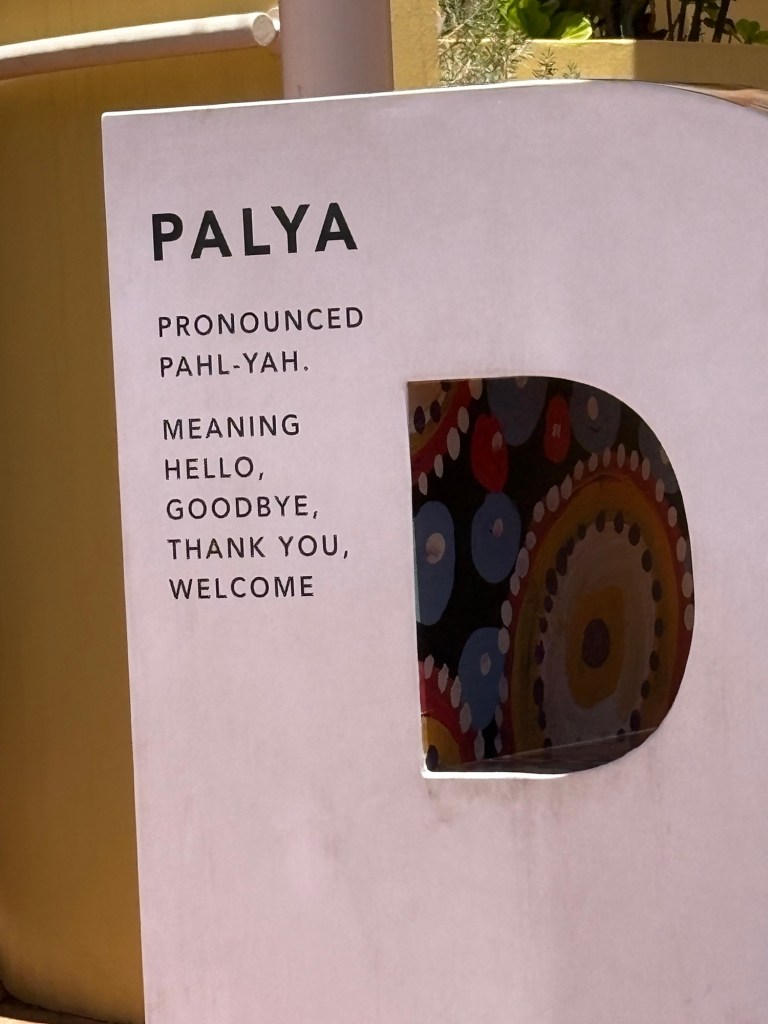
Palya is the local word for hello, goodbye, thank you, you’re welcome, how are you, and I’m fine, all in one handy little word (not unlike “Aloha” in Hawaiian). Palya for adventuring with us through the Outback!


 LeBeau on the Go
Leave a comment